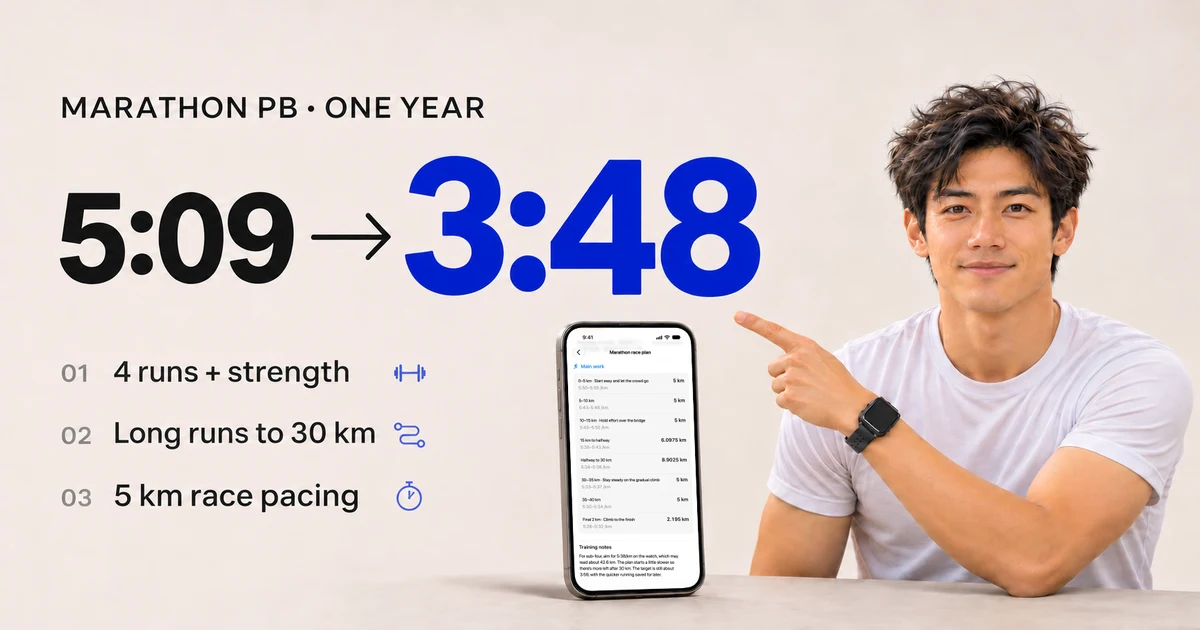
How I Went from a 5:09 Marathon to 3:48 in a Year
At 26 km in my first marathon, my legs were giving out. A year later, I reached 26 km, took a photo, and kept getting faster.

I went into my third marathon hoping to go sub-4.
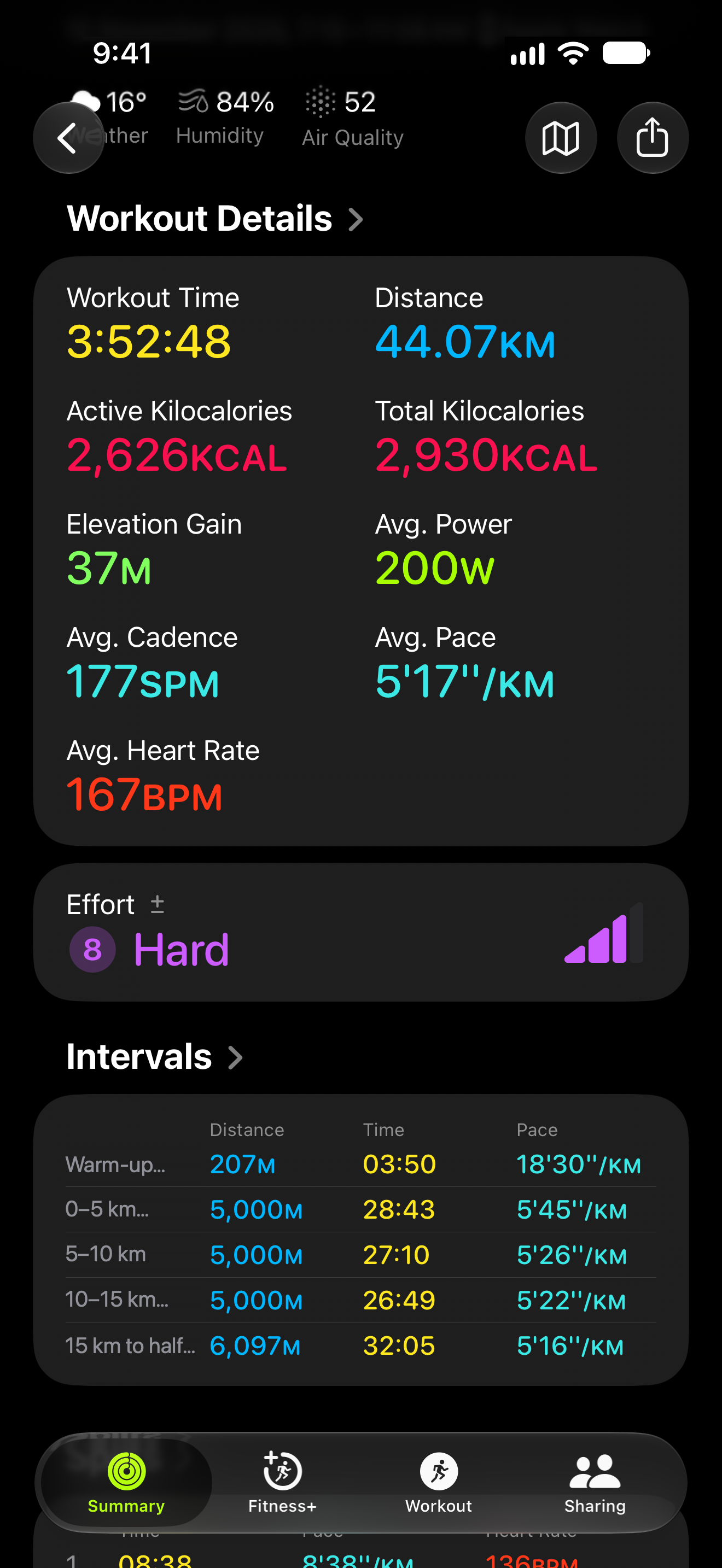
My official time was 3:48:48, and I’d run the second half faster than the first. I was thrilled.
A year earlier, my first marathon had taken me 5:09. Around 26 km, my legs were starting to give up. I spent much of the remaining distance switching between running and walking, just trying to finish.
That’s an improvement of about 1 hour and 21 minutes.
During this latest training block, I was also running one fewer day a week.
Here’s what changed, how I used Rayvik along the way, and why a photo I took at 26 km means so much to me.
Two marathons, the same struggle
Before my first marathon, I’d already run two halves. My best was 1:47.
I became curious about the full distance, started adding longer runs, and asked ChatGPT for advice. Eventually, I signed up to give it a go.
Looking back, I wasn’t as prepared as I thought.
Race day was hot. For the first 26 km, I was running somewhere in the sixes per kilometre. Then my thighs started feeling like they might cramp.
After a toilet stop, I struggled to get going again. My breathing felt manageable, but my legs barely wanted to move. My pace kept dropping, and eventually I was taking walking breaks.
I finished in 5:09.
A month later, I tried again. I started more slowly, around 6:30 to 7:00 per kilometre, with one goal. Run the whole thing.
I managed it, finishing in 5:03 without walking.
I was proud of that. But I’d still started fading around halfway, and the second half felt incredibly hard.
Starting slower had helped. I needed to look more closely at my training, too.
Finding a plan that fitted my life
Later, I ran another half in 1:46.
I kept thinking about why I could run a decent half but struggle so much over the full distance.
Most of my long runs had stopped around 21 or 22 km. Before my first marathon, I’d only gone beyond 30 km once. I had very little experience spending that much time on my feet.
I started looking for more structure.
I tried Runna, Garmin’s training plans and ChatGPT. The plans helped me understand how easy runs, intervals, threshold sessions and long runs could fit together. I started taking strength work more seriously as well.
But fitting a plan around work and family brought its own questions.
What if my boss suddenly asked me to travel? Or I worked late, barely slept, and had intervals scheduled the next morning? What if the kids’ activity schedule changed and I needed to drive them somewhere during my usual running time?
Then there were bigger disruptions. A cold with race day approaching. A week-long family road trip with time for a few short runs, but very little room for a long one.
I wanted to know what I could move, reduce or skip, and how those changes would affect the rest of my training.
I could talk those things through with ChatGPT. But I kept having to gather screenshots and explain my recent training, previous injuries, goals and how I’d been feeling. Keeping all that background up to date took effort.
That was what got me started building Rayvik. I wanted a running coach that could keep track of that context and help me work through those decisions.
I trained with an early beta of Rayvik for roughly three months, improving it along the way as I learned from my own training.
Four runs, two strength days, one day off
I started the training block with a 4:15 marathon goal.
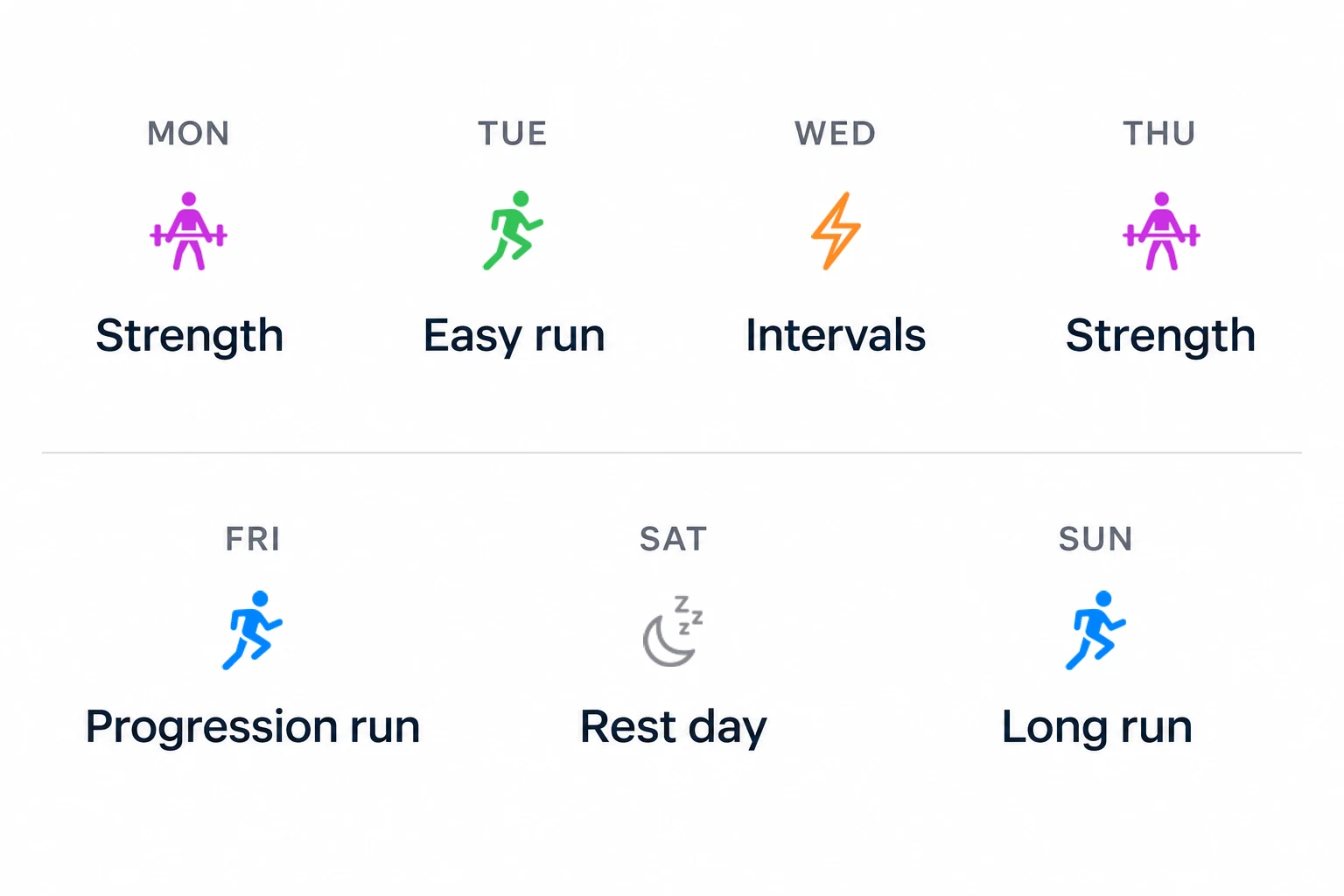
With Rayvik, I put together a week built around four runs, two separate strength days and a full rest day. The running included easy sessions, a quality workout such as intervals or threshold work, and a weekend long run.
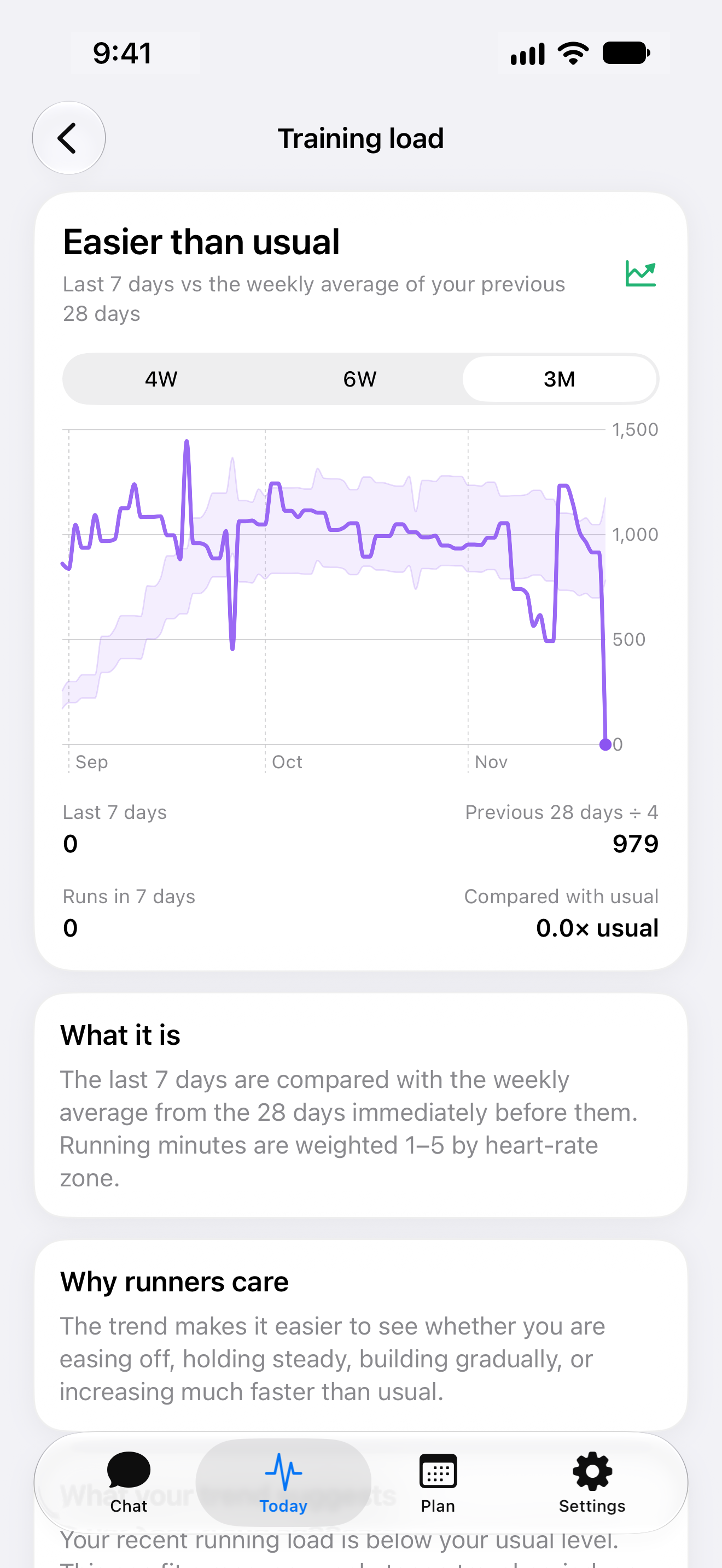
I’d previously been running five days a week. With this structure, my running days went down, but my weekly mileage gradually settled around 70 km.
Having a clear session to follow helped. I knew what I was heading out to do, what pace range to aim for, and where recovery fitted into the week.
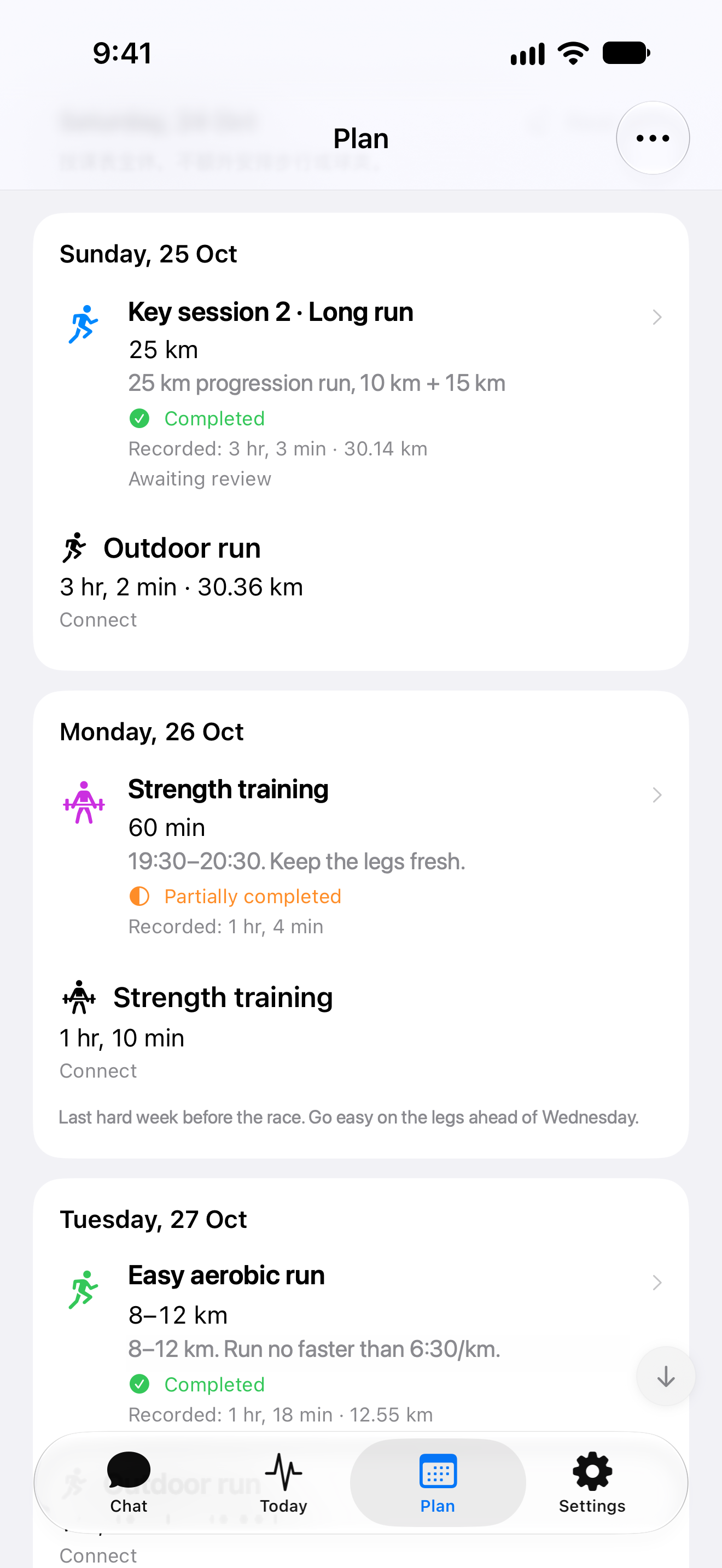
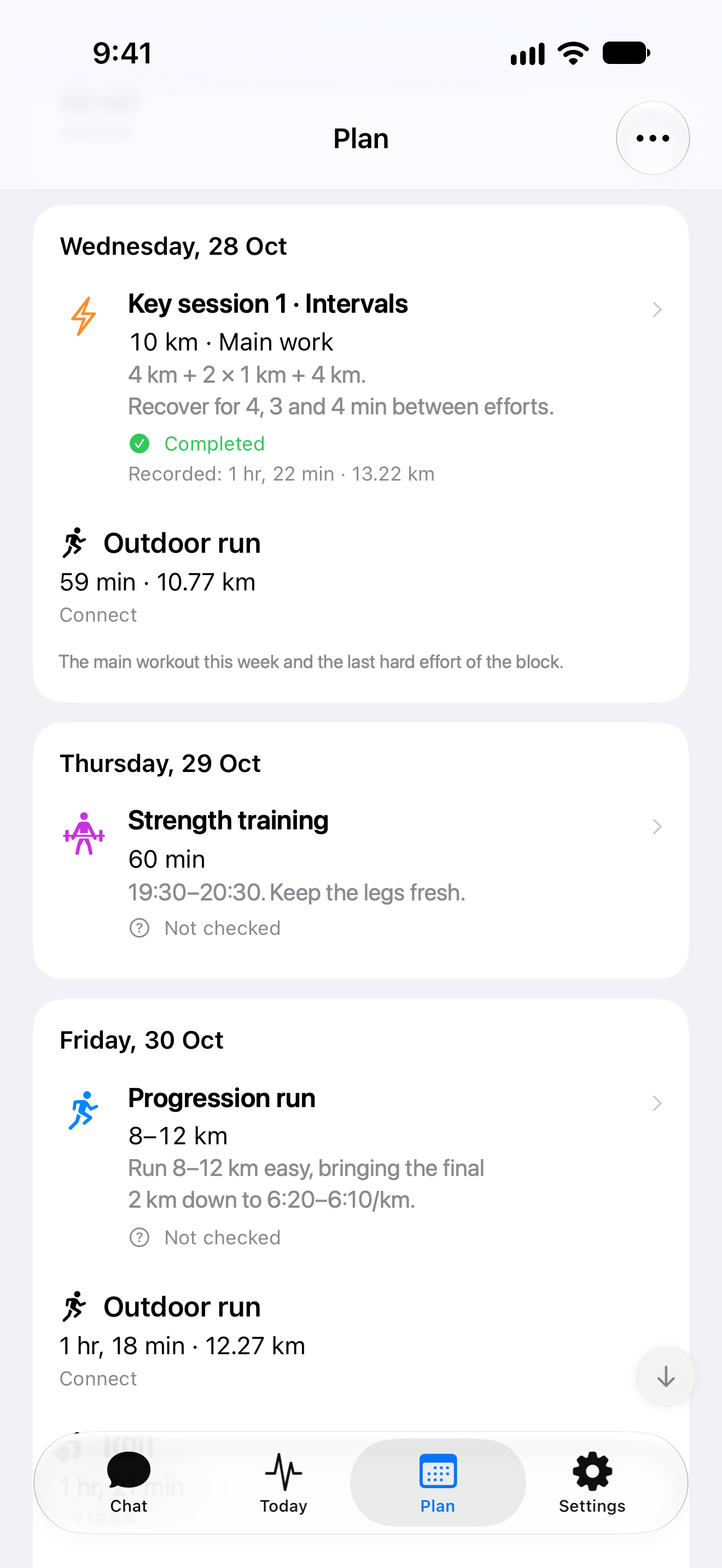
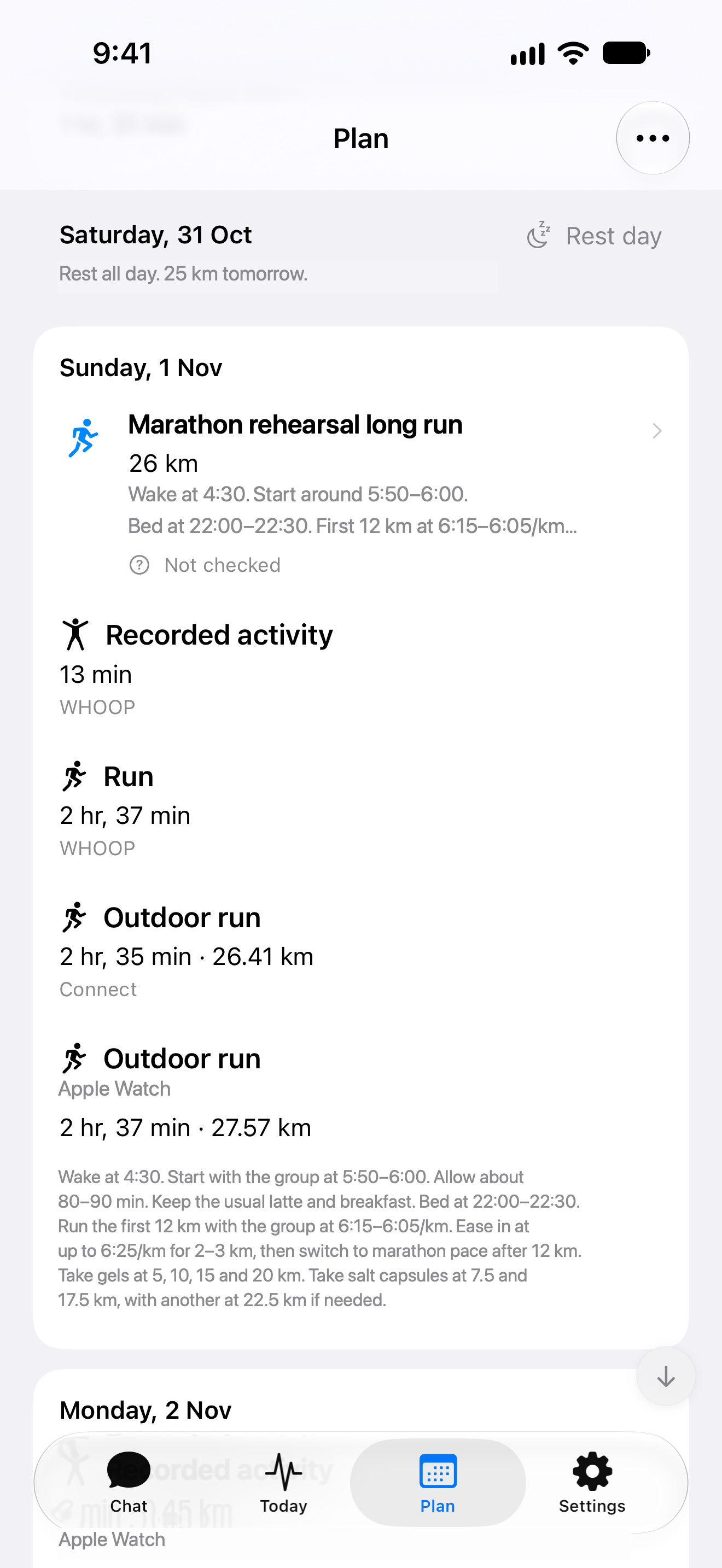
The first few interval sessions were tough. Over time, I could complete similar workouts at similar paces and feel like I had something left.
I generally stayed within the planned range, even on days when I felt good. I was conscious of doing too much too soon, and I wanted to keep training consistently.
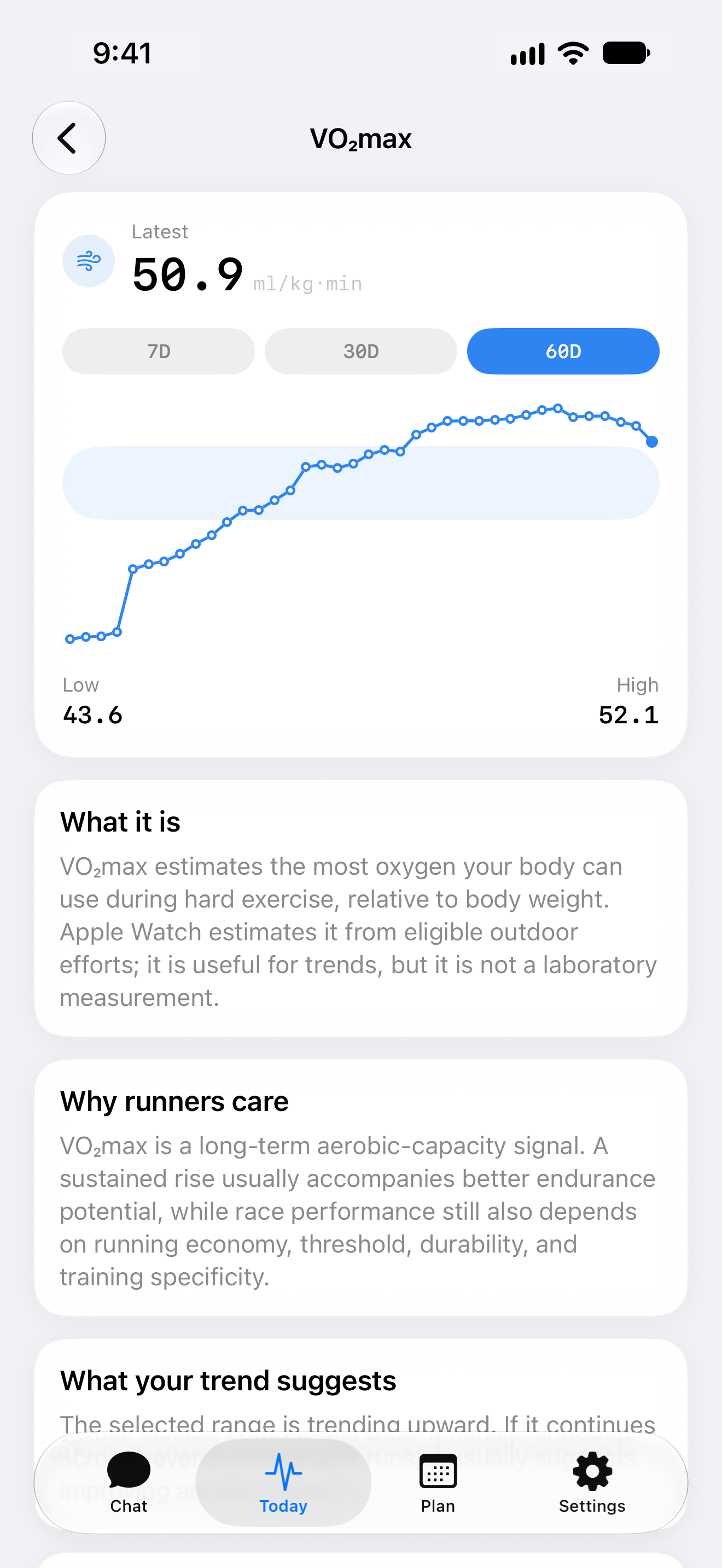
My watch-estimated VO₂max was trending upward overall, too. Seeing that was encouraging, alongside the changes I could feel in familiar sessions.
Learning how 30 km could feel
The weekend long runs gave me the biggest change in confidence.
I started around 25 km, repeated that distance a few times, then gradually worked up to 28 and 30.
After each run, I’d ask myself how much I had left. Was my form still holding up? Could I have kept going?
More often, the answer was yes.
I stopped at the planned distance, ate plenty of carbs and protein afterwards, and usually got some extra sleep that day. I wanted to recover well enough to come back for the following week.
Those repeated long runs helped me get familiar with running on tired legs while still feeling in control.
Eventually, Garmin predicted I could run 3:36:30.
I enjoyed seeing that number. But I’d been burned by its predictions before, so I took it cautiously.
I’d originally planned to use this race as a rehearsal, aiming for around 4:10 before trying for sub-4 at a later marathon. By race day, though, I felt ready to give it a go.
Back at 26 km
Before the race, I used Rayvik to work through the course and set pace ranges for sections of roughly 5 km, with a separate checkpoint at halfway.
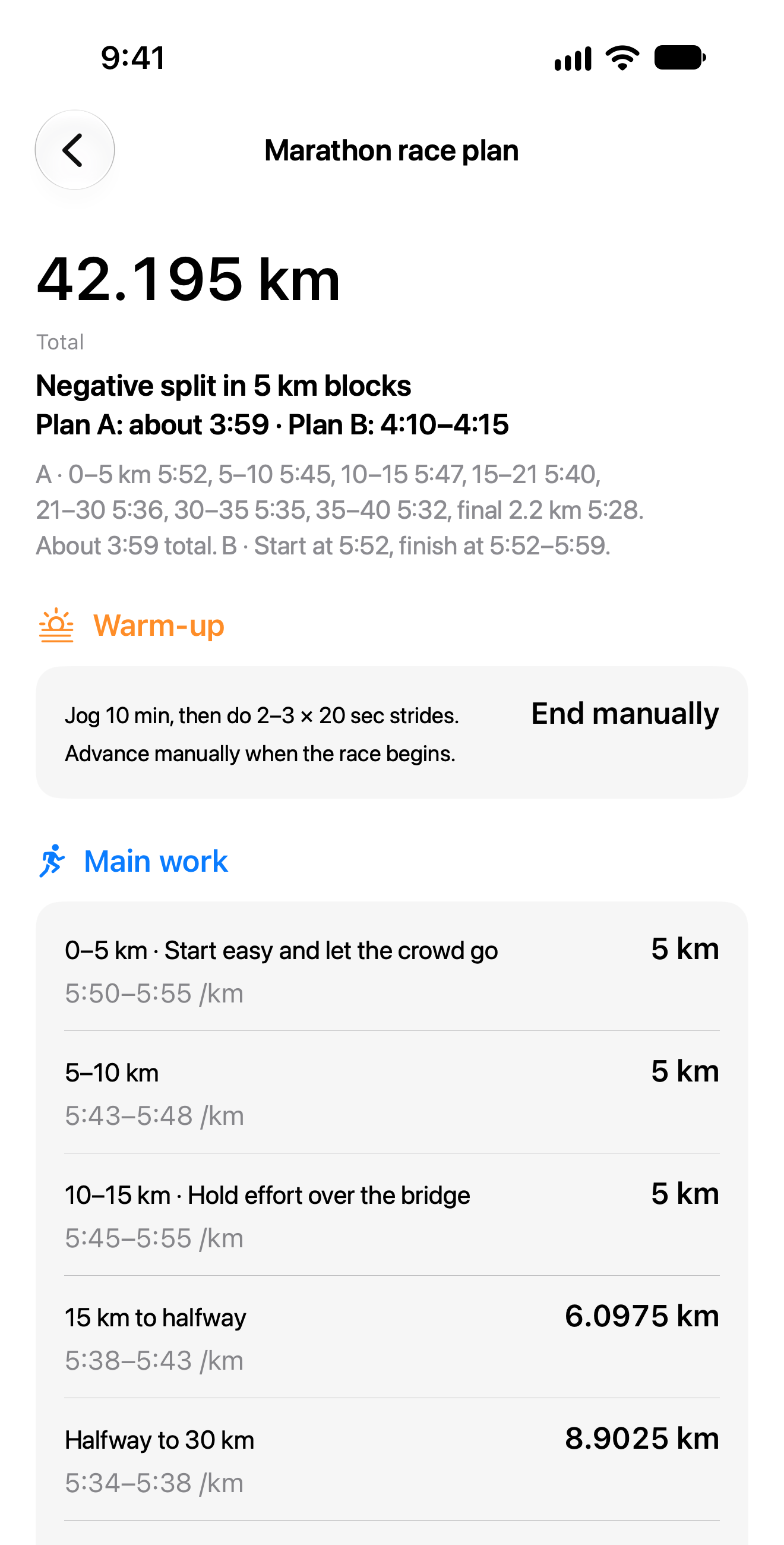
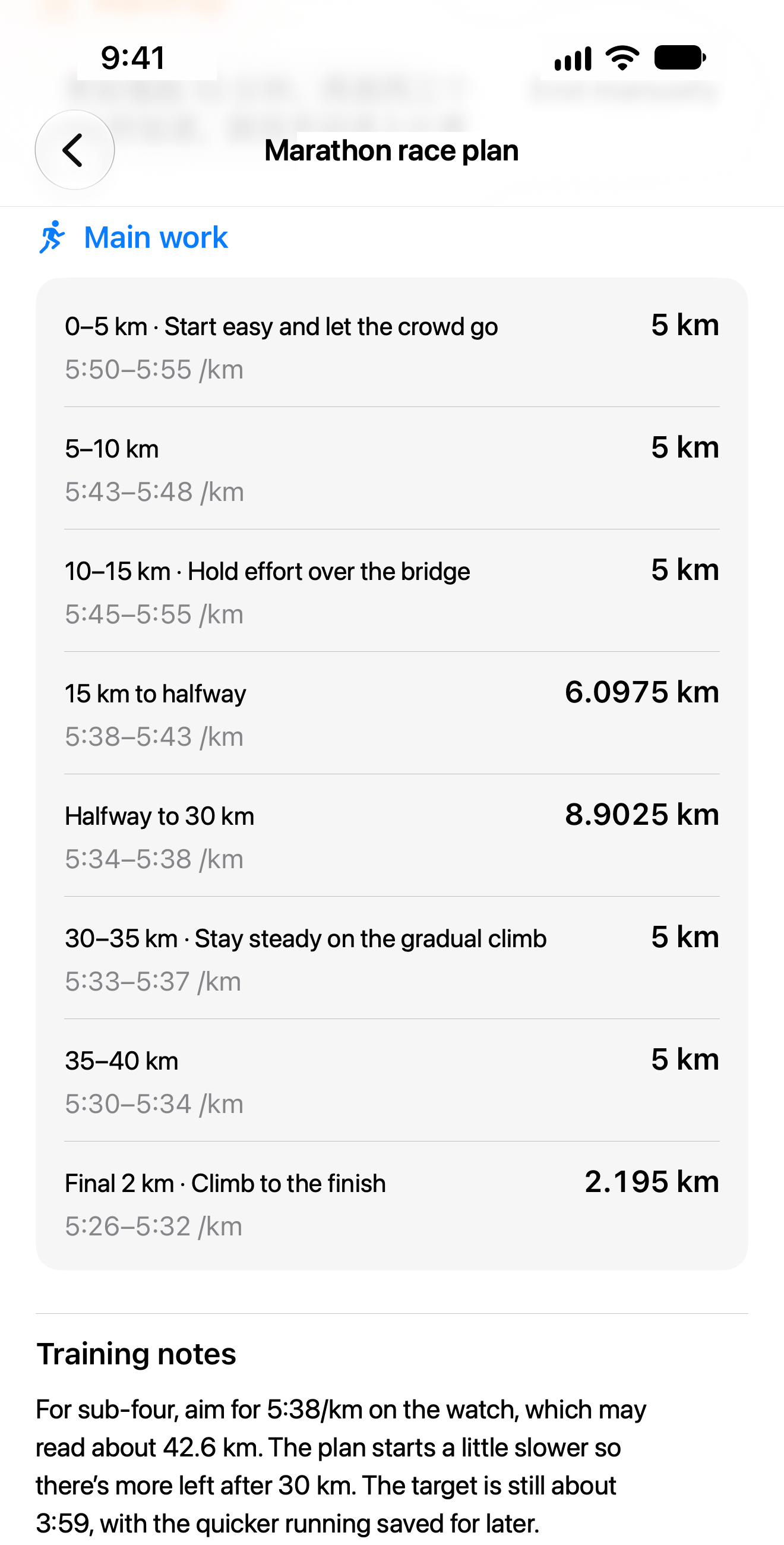
The idea was to reach halfway in roughly two hours, then reassess. I could check the plan on my watch as I ran, which helped me stay patient early on.
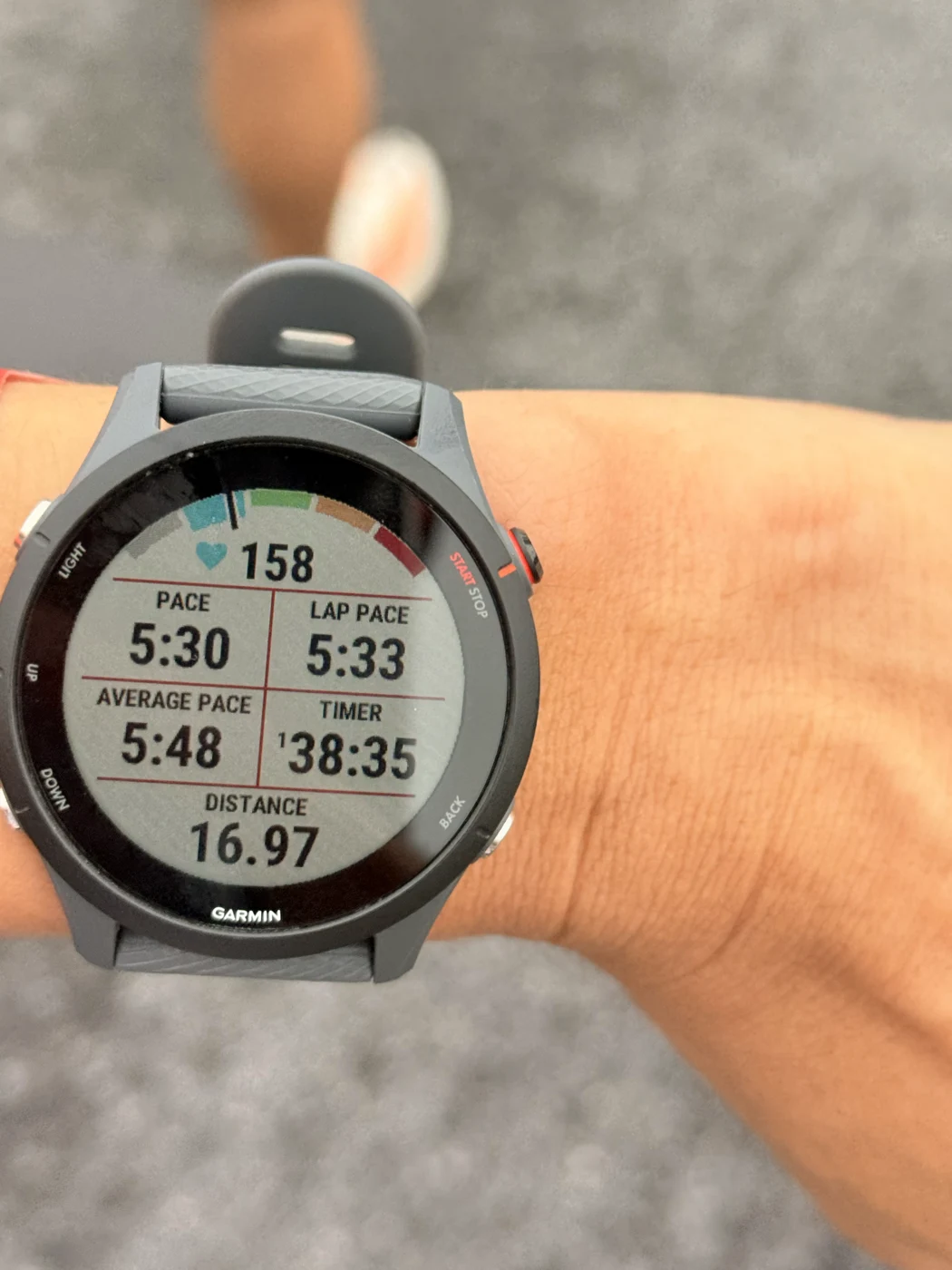
At halfway, I still felt good.
Then I reached 26 km.
I’d just passed a few runners. My legs felt good, and I took a photo of the distance marker.
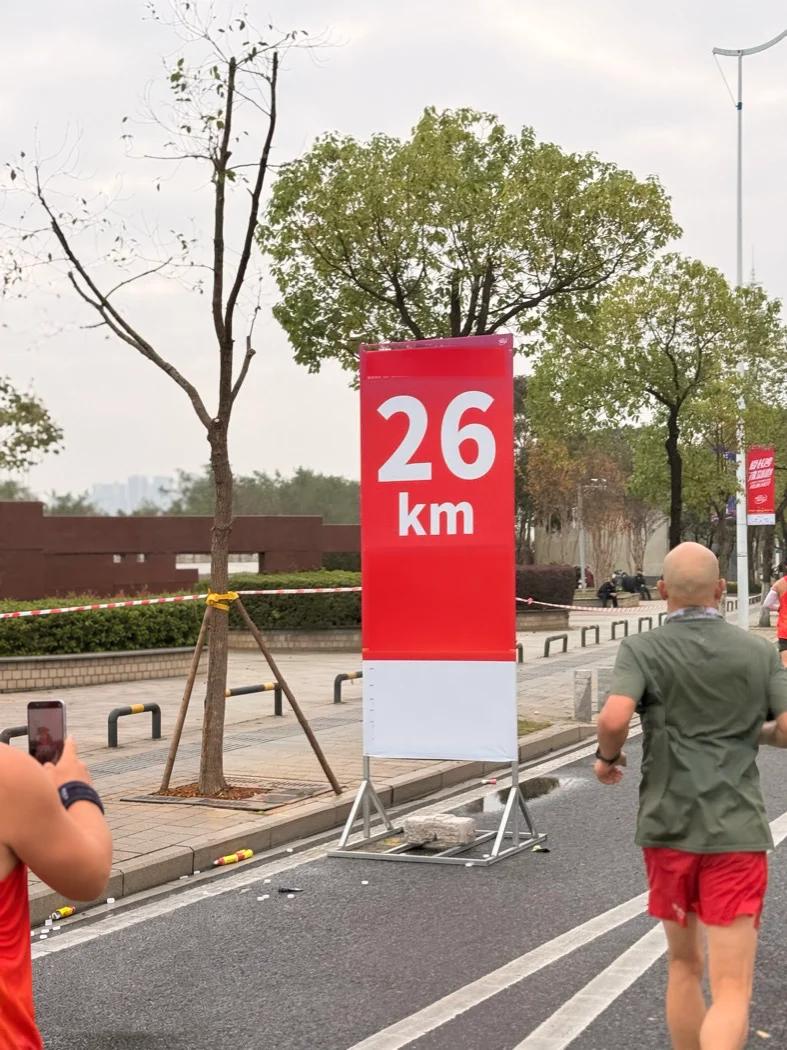
Around this point in my first marathon, I’d been struggling to keep running. This time, I still had plenty left in the tank.
That felt pretty special.
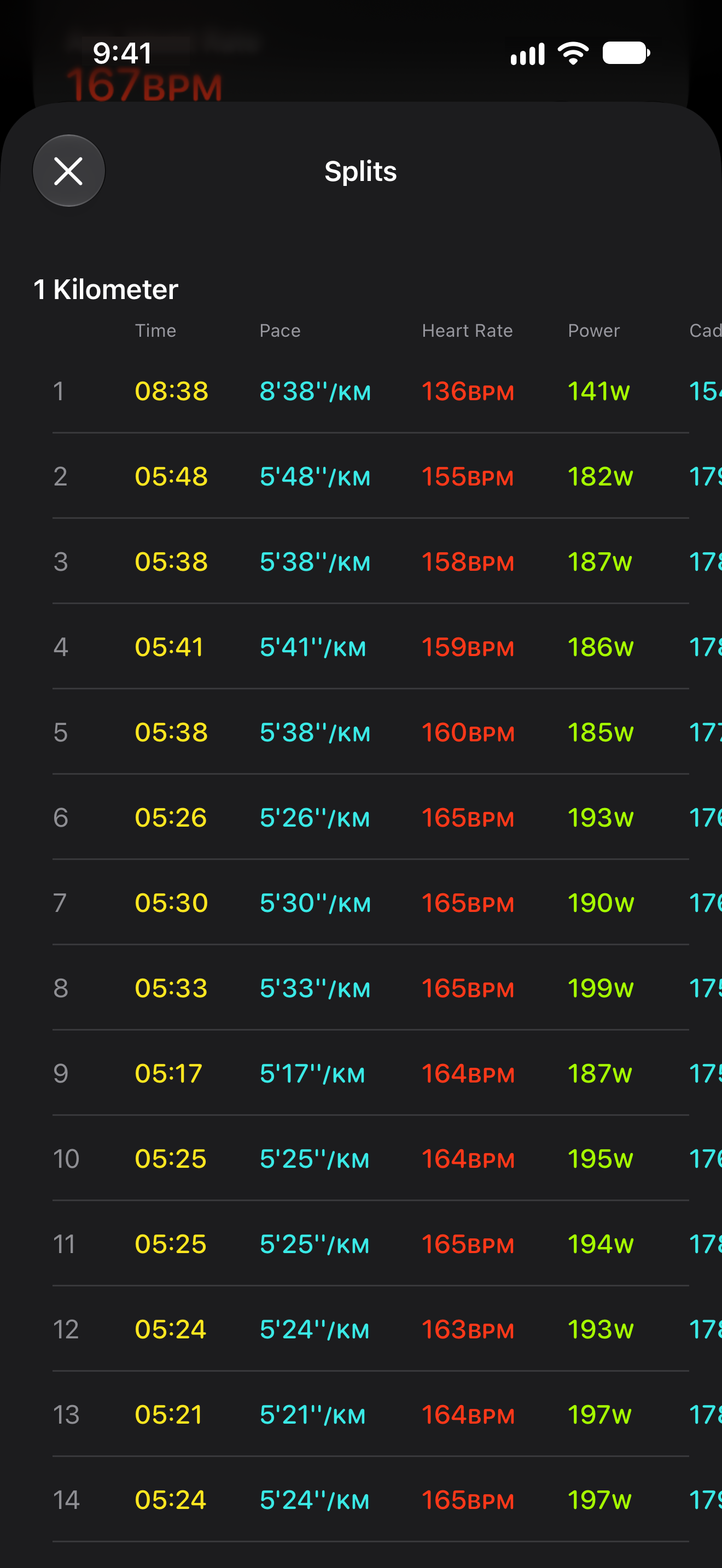
I kept checking in every 5 km. How was my breathing? How were my legs holding up? When it felt right, I picked up the pace a little.
Past 30 km, my legs were tired. I recognised that feeling from training, and I could still run well.
I gradually kept pushing and crossed the line in 3:48, with a faster second half.
My first sub-4, and a negative split.
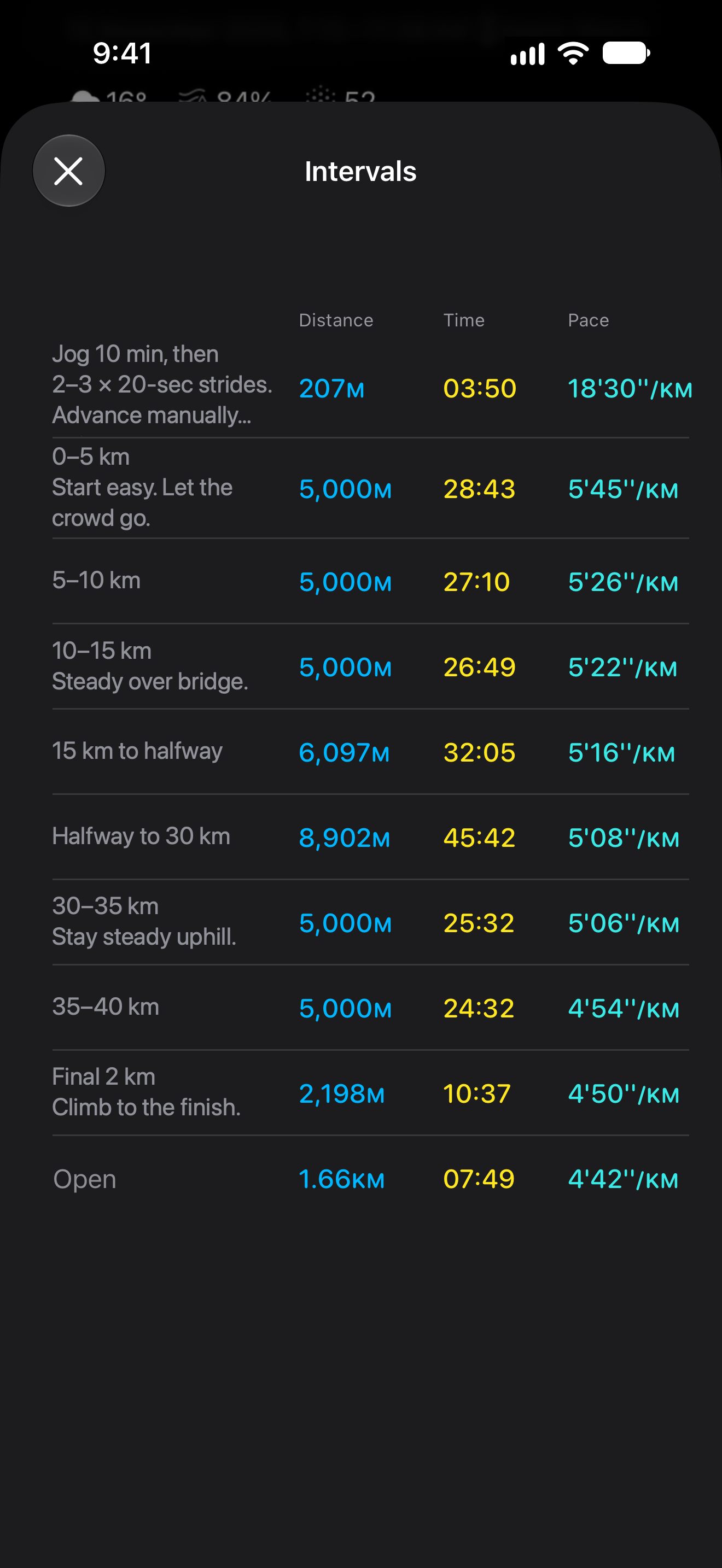
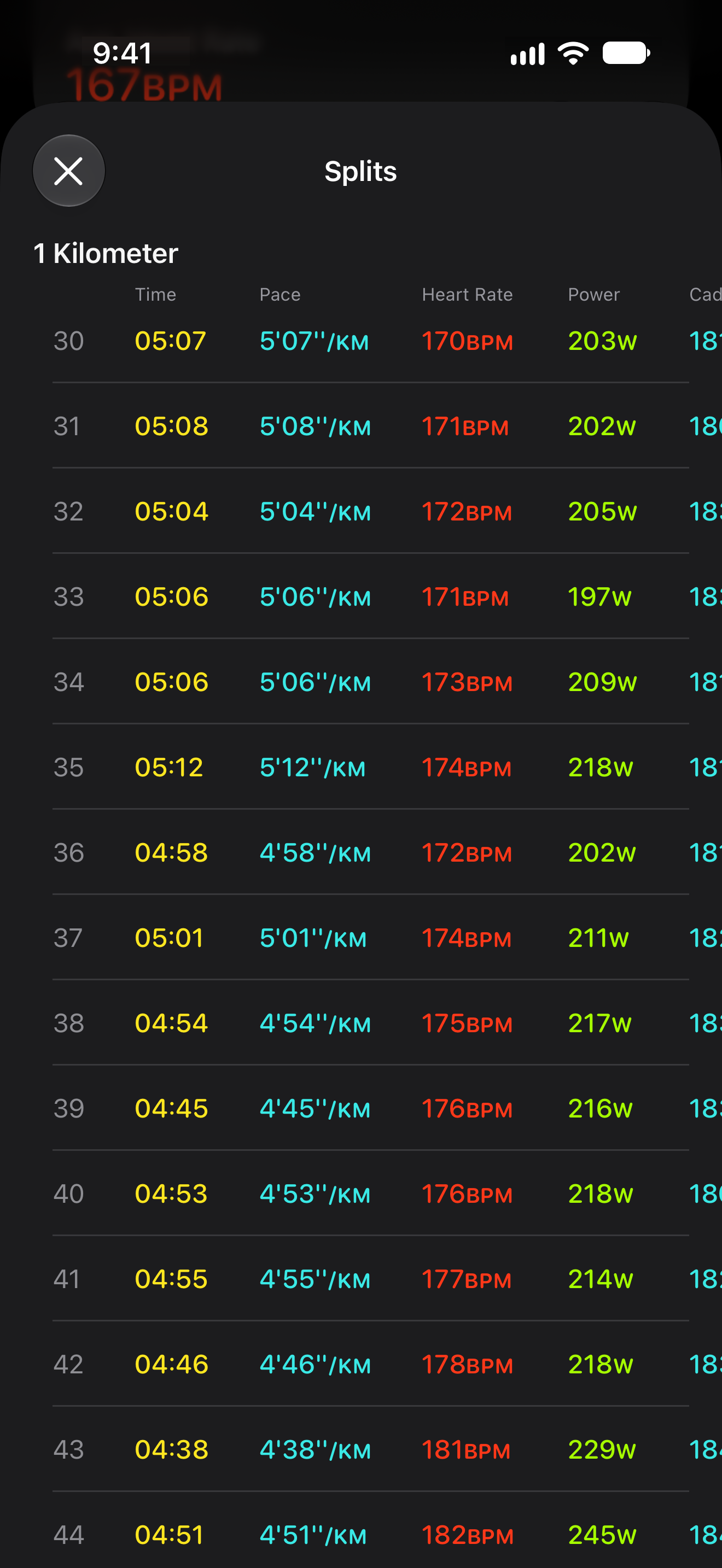
More from my watch recording
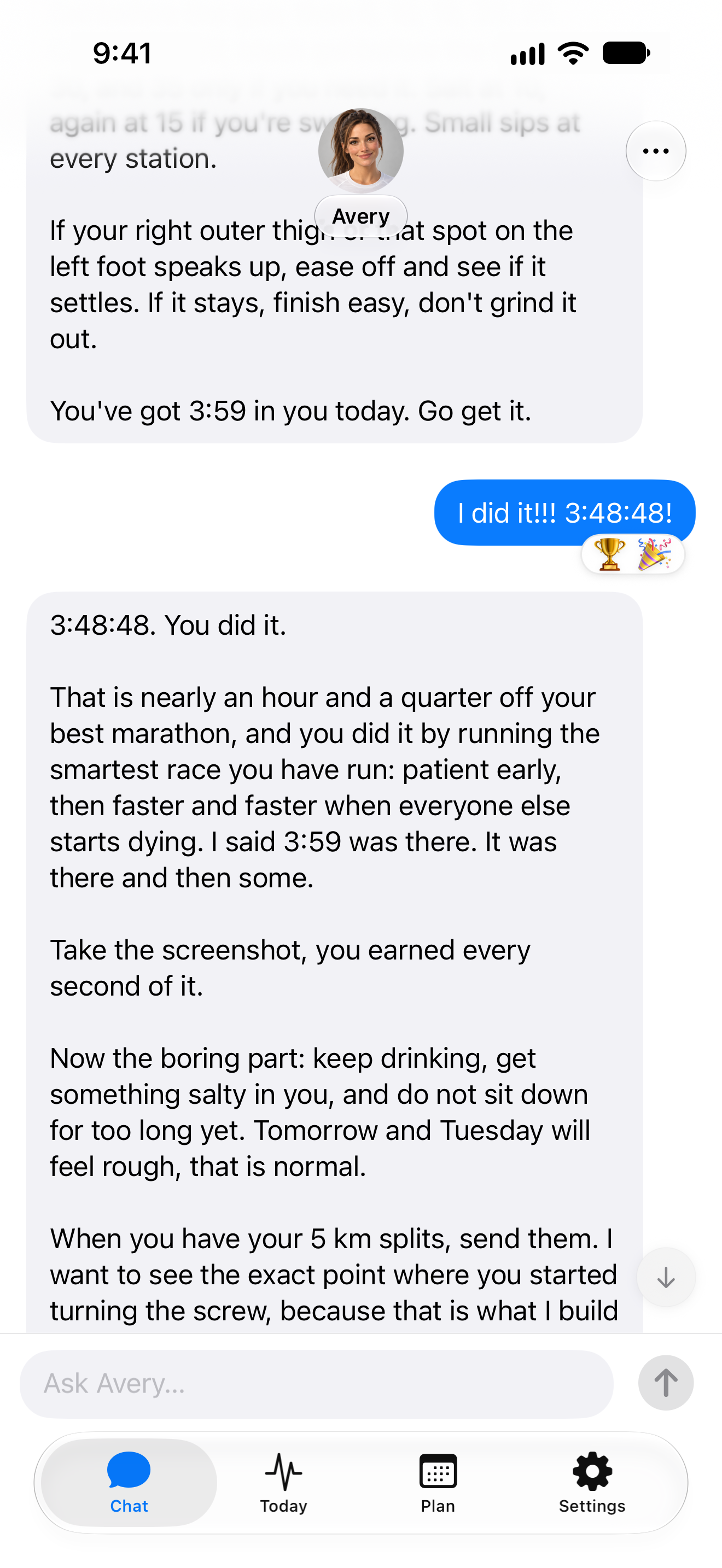
When my official result came through, I shared it with Avery, my AI coach. She celebrated with me.
What worked, and what I’m improving next
Looking back, three things stand out.
- A training week I could stick to. Rayvik helped me organise the running, strength work and rest around my goal. I understood what each session was for and how the week fitted together.
- Long runs I built up gradually and recovered from. Repeating those distances helped me get familiar with tired legs. Finishing with decent form and a little left gave me confidence for race day.
- A race plan I could follow on my watch. The 5 km checkpoints helped me stay controlled early, check how I felt, and decide when to push.
This race also gave me ideas for improving Rayvik.
The course had three major climbs. That got me thinking about bringing course information into the training plan earlier. For a hillier marathon, I’d want Rayvik to use the elevation profile to help plan more specific hill sessions and long runs that practise the demands of the course.
I also want to carry those details further into race-day planning, accounting more precisely for where the climbs come and how they affect the target pace for each section.
Those are things I’m working towards in the next iterations.
For now, I’m really happy with 3:48. And I’m glad I took that photo at 26 km.
A year earlier, I’d been struggling to keep moving at that distance. This time, I was enjoying the race, passing a few people, and still had plenty left in the tank.
What are you training for?
Which marathon are you planning to run next? And what’s been the hardest part of preparing for it?
One of the things I enjoy most about building it is how much I keep learning. My own training gives me ideas to work on, and feedback from other runners brings up things I might never have thought of.
If you give it a go, let me know what helps and what you wish it could do better. That’s how I’ll keep improving it.