What Is HRV? A Runner’s Guide to Recovery
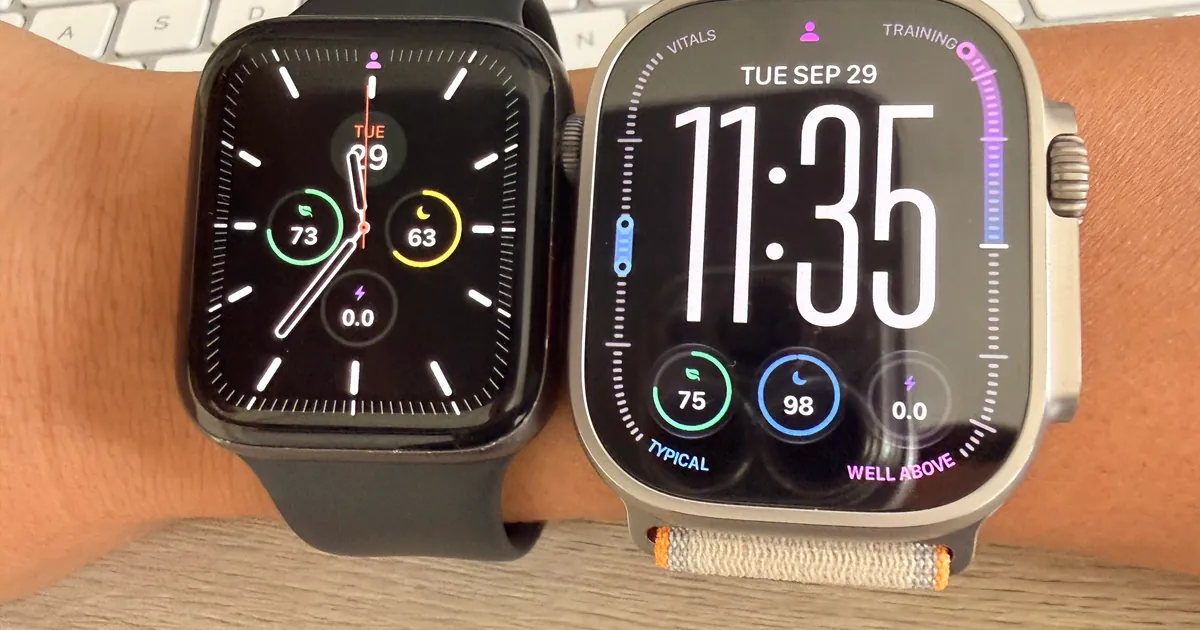
You feel fine, then your phone says your HRV is low. Do you still train today?

It’s easy to get into the habit of reading HRV like a grade. High feels good. Low feels like something went wrong. Then you wake up feeling fine, check your phone, and see that your HRV is down. You were about to head out for a run. Now you’re wondering whether to go at all. If it’s race morning, that little number is even harder to put out of your mind.
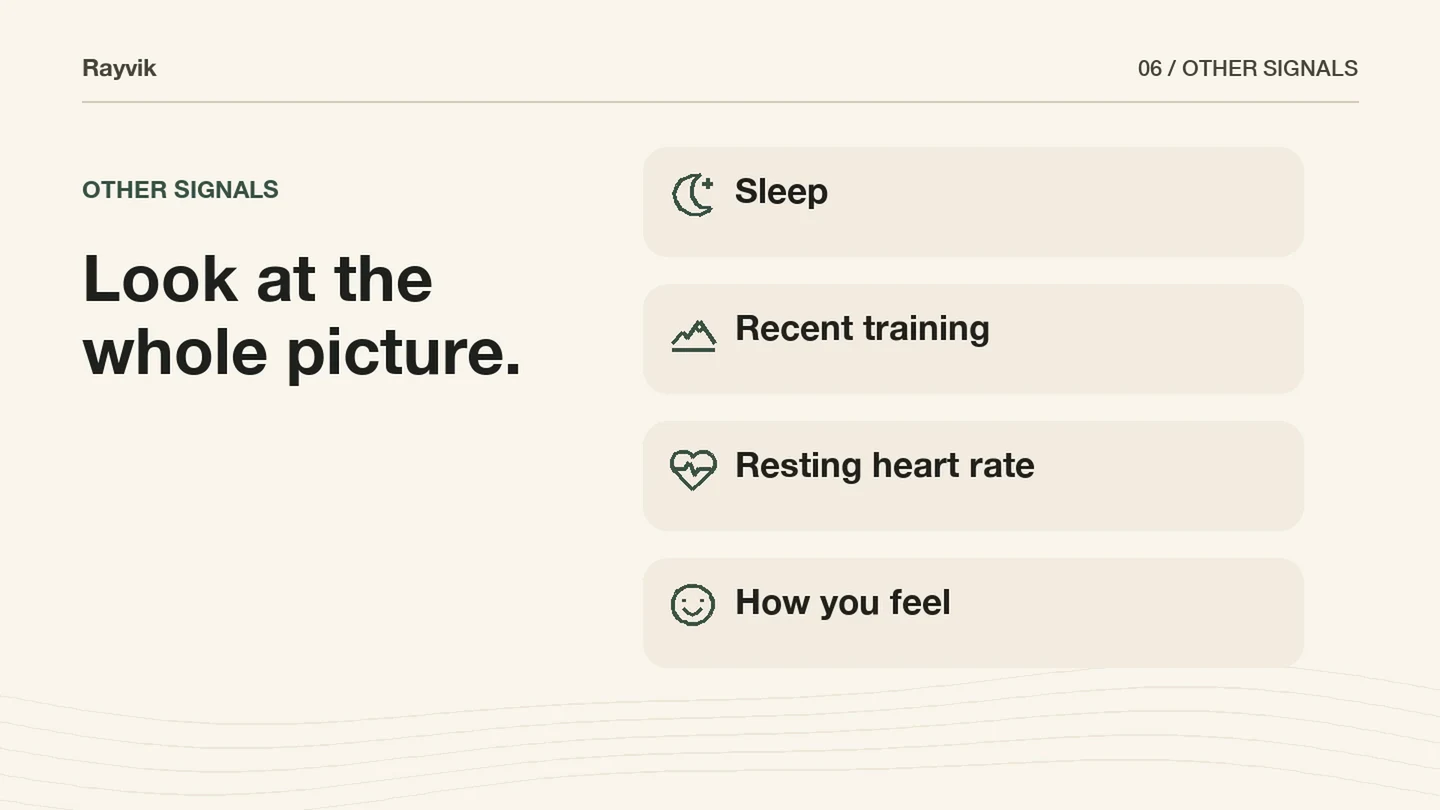
Heart rate variability (HRV) measures how much the time between heartbeats changes. If I get one low reading and feel fine, I check it against my usual range before changing the workout. I also look at sleep, recent training, resting heart rate and how my legs feel in the warmup.
What does HRV measure?
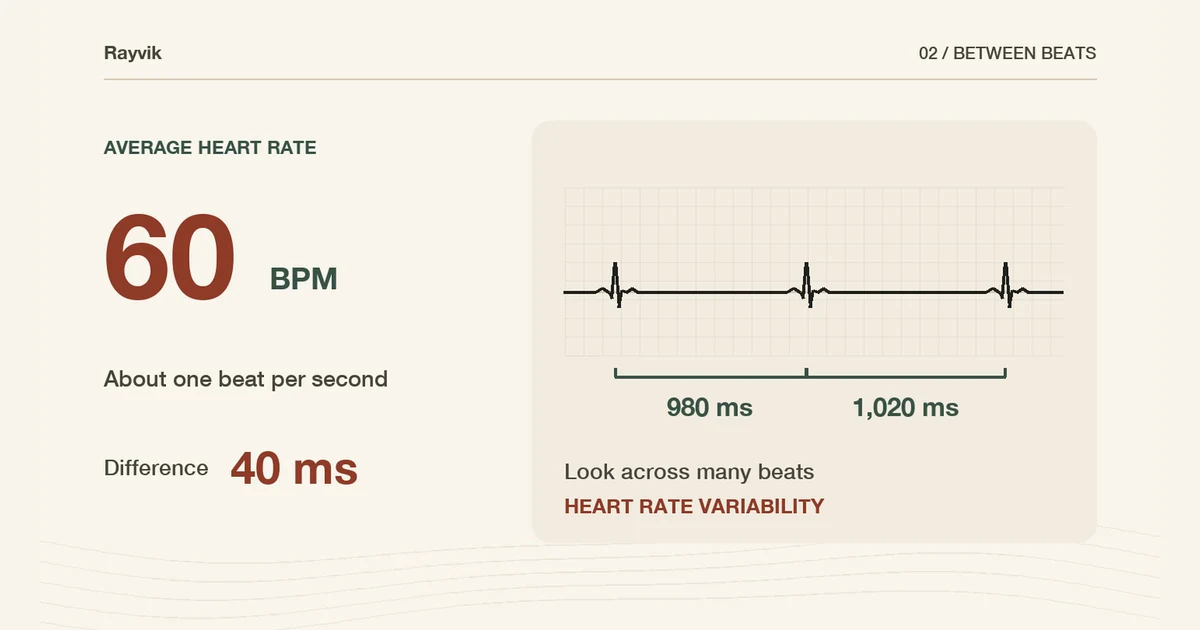
Say your heart rate is 60 beats a minute. That’s one beat a second, on average. Now look at three beats. The first gap is 980 milliseconds. The next is 1,020. Both are close to a second, but the two gaps differ by 40 milliseconds.
The 40 milliseconds in this example is the difference between two gaps. The HRV value on a watch summarizes variation across a series of beats and is commonly reported in milliseconds. Heart rate variability measurement standards
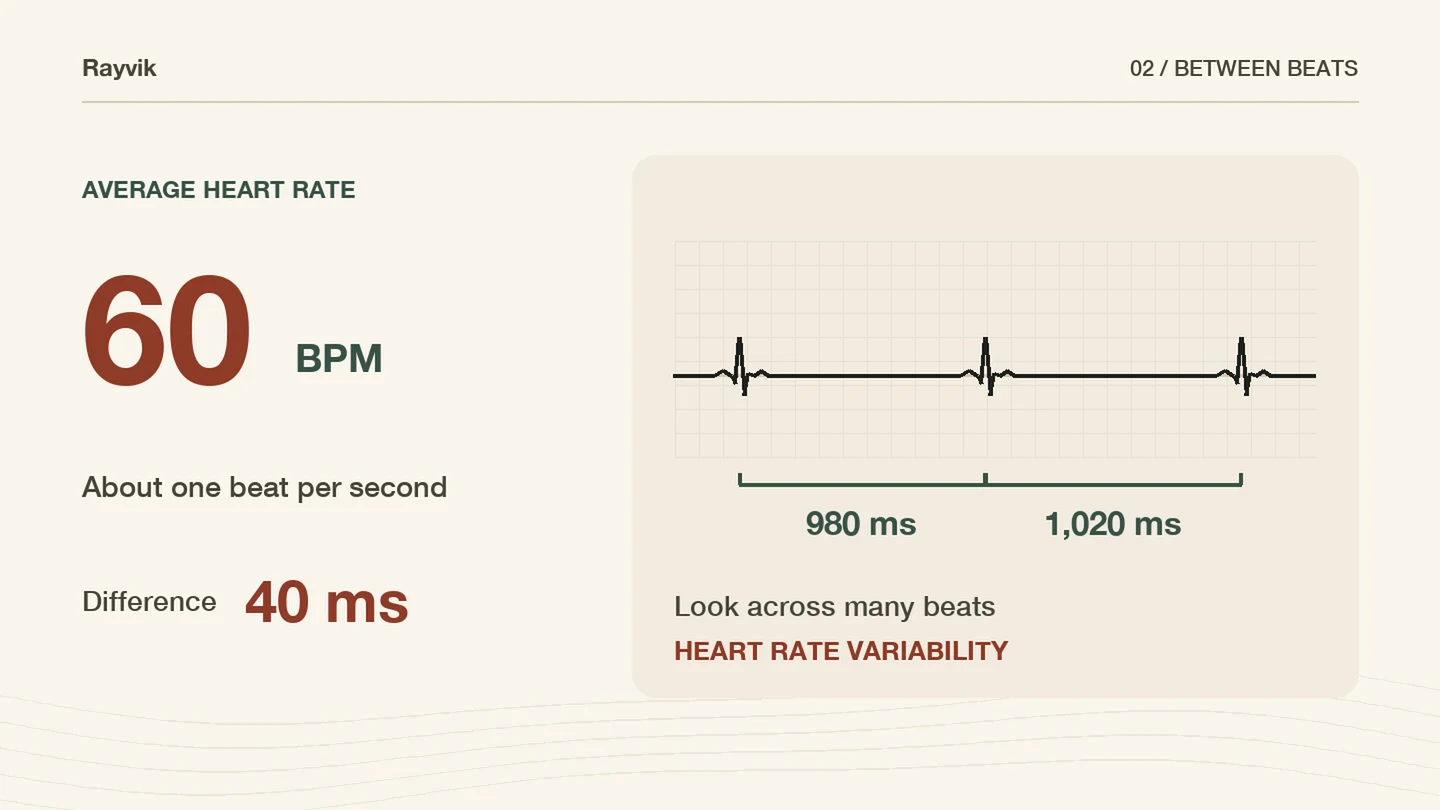
Play the heartbeat animation
Why does the gap between beats change?
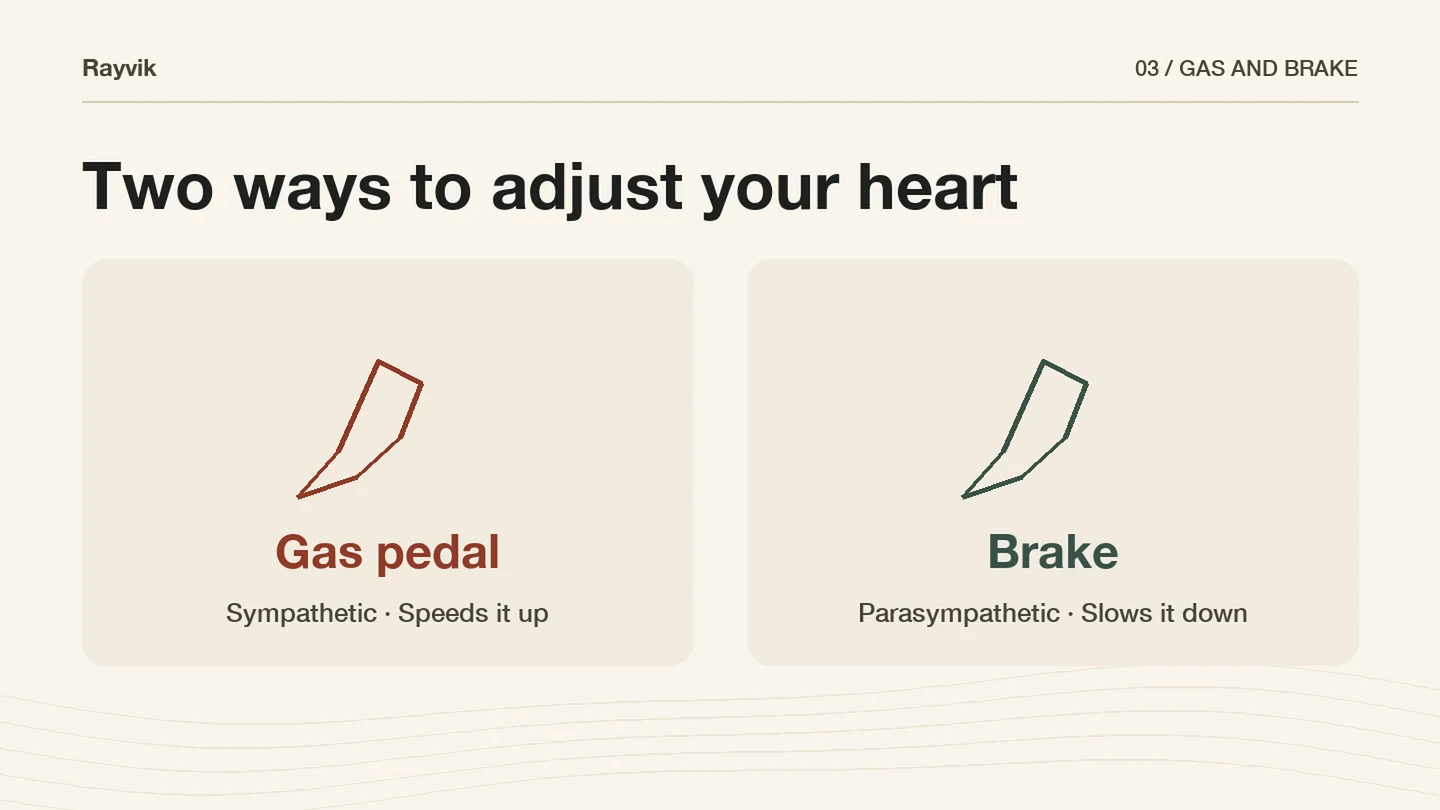
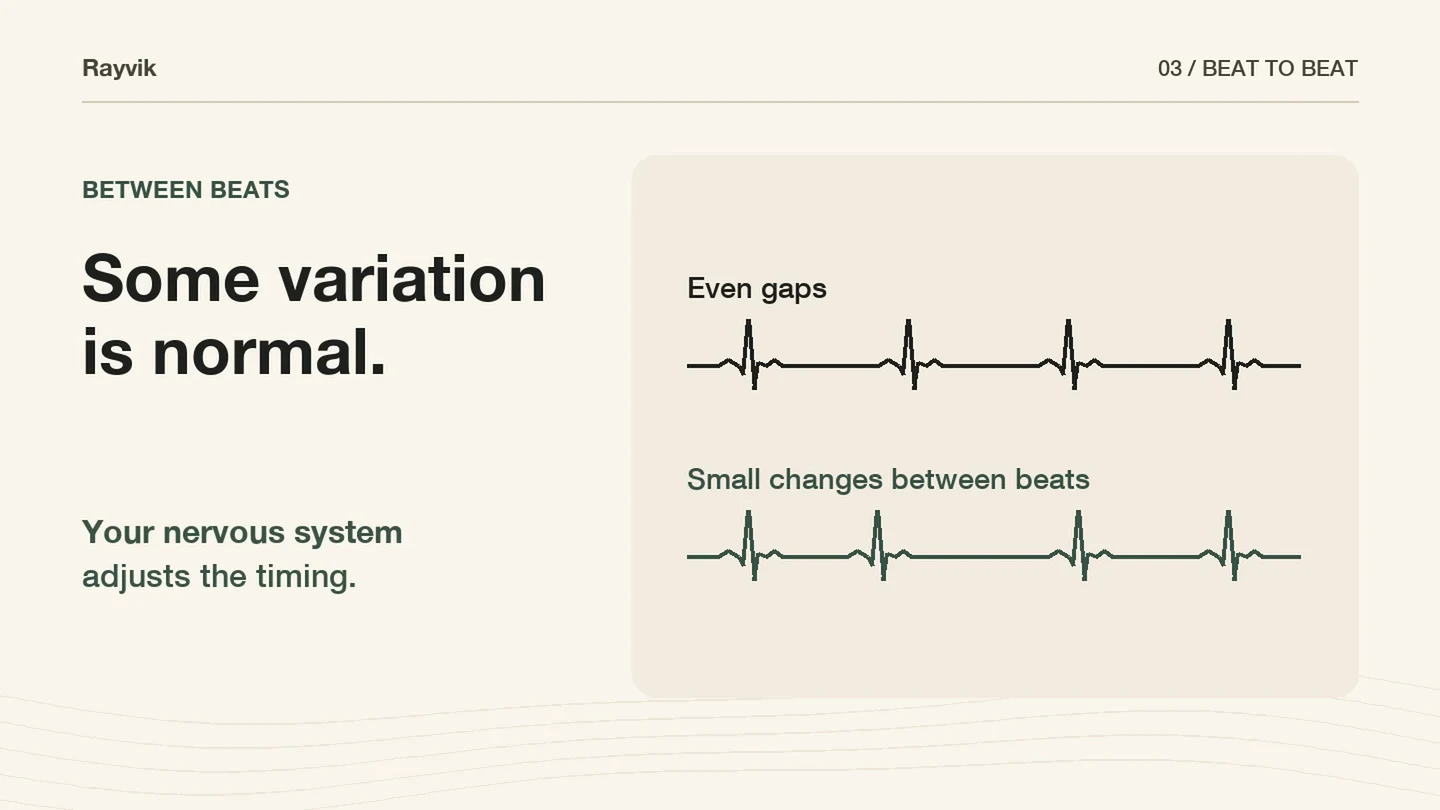
Your heart doesn’t tick like a clock. Your nervous system is always making small adjustments. I like to think of it as a gas pedal and a brake. The sympathetic side helps speed your heart up when you’re running hard. The parasympathetic side helps slow it down and fine-tunes the timing from one beat to the next.
You can see some of that just sitting still. Your heart often speeds up a little when you breathe in, then slows down when you breathe out. That bit of variation is normal.
What can HRV tell me about recovery?
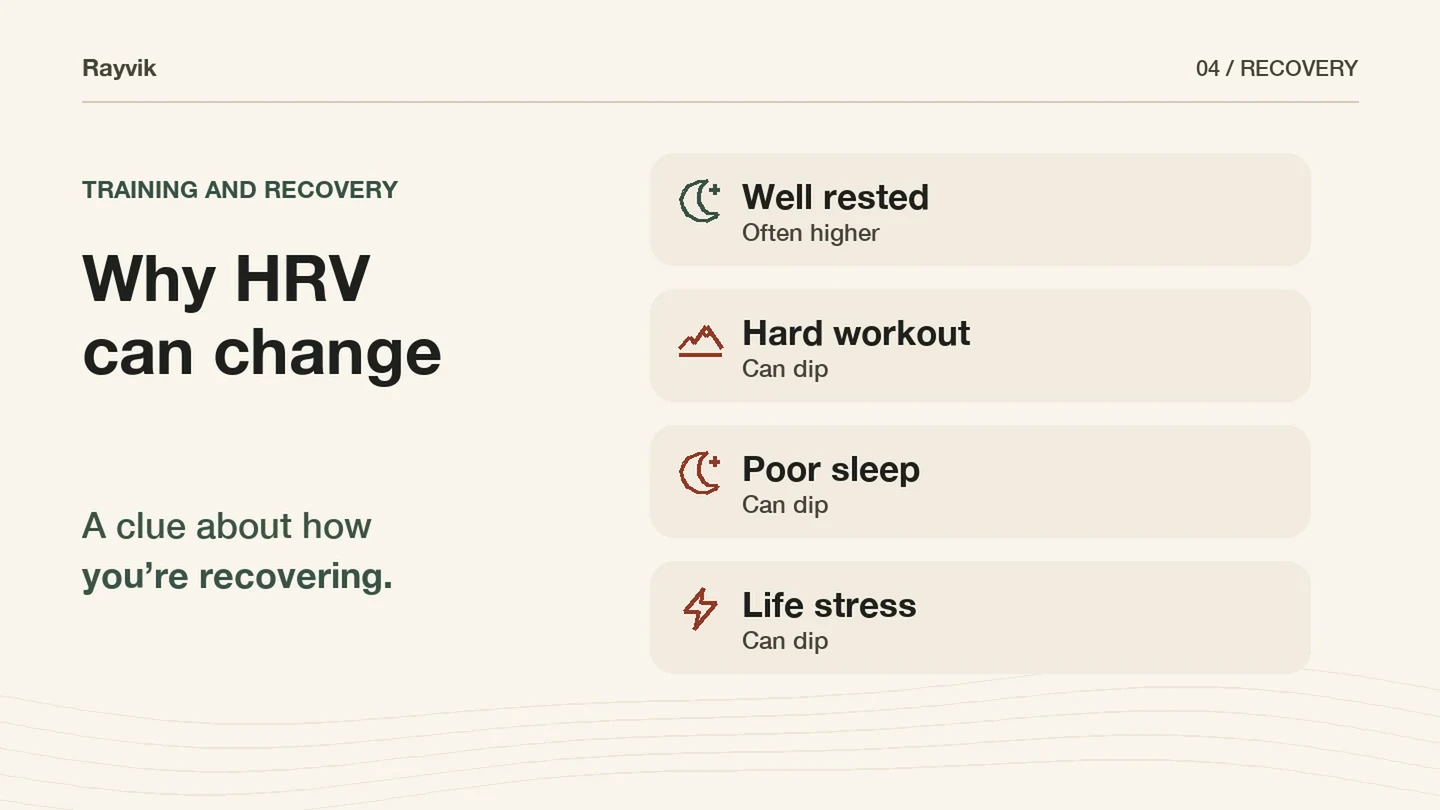
After a hard run, my HRV can stay lower for a while. A short night or a stressful few days can affect it too. If I see a dip after a hard session, I’ll check how I slept and how my legs feel the next day. That gives me more to go on before I decide how much work to do.
What’s a good HRV for a runner?
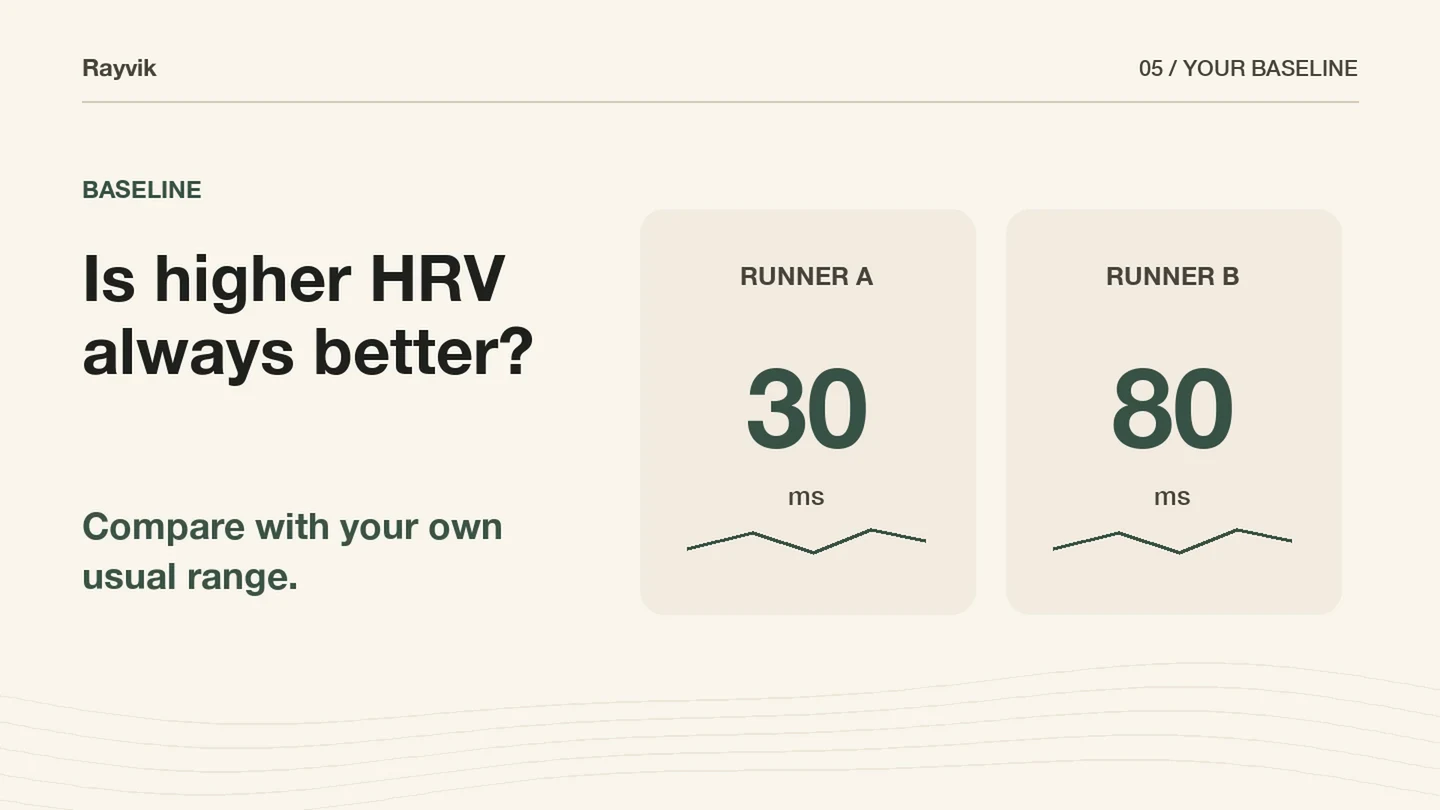
A useful baseline is your own usual range, built up from several weeks of readings taken under similar conditions. One runner might usually sit around 30 ms. Another might sit around 80 ms. Each can be normal for that runner.
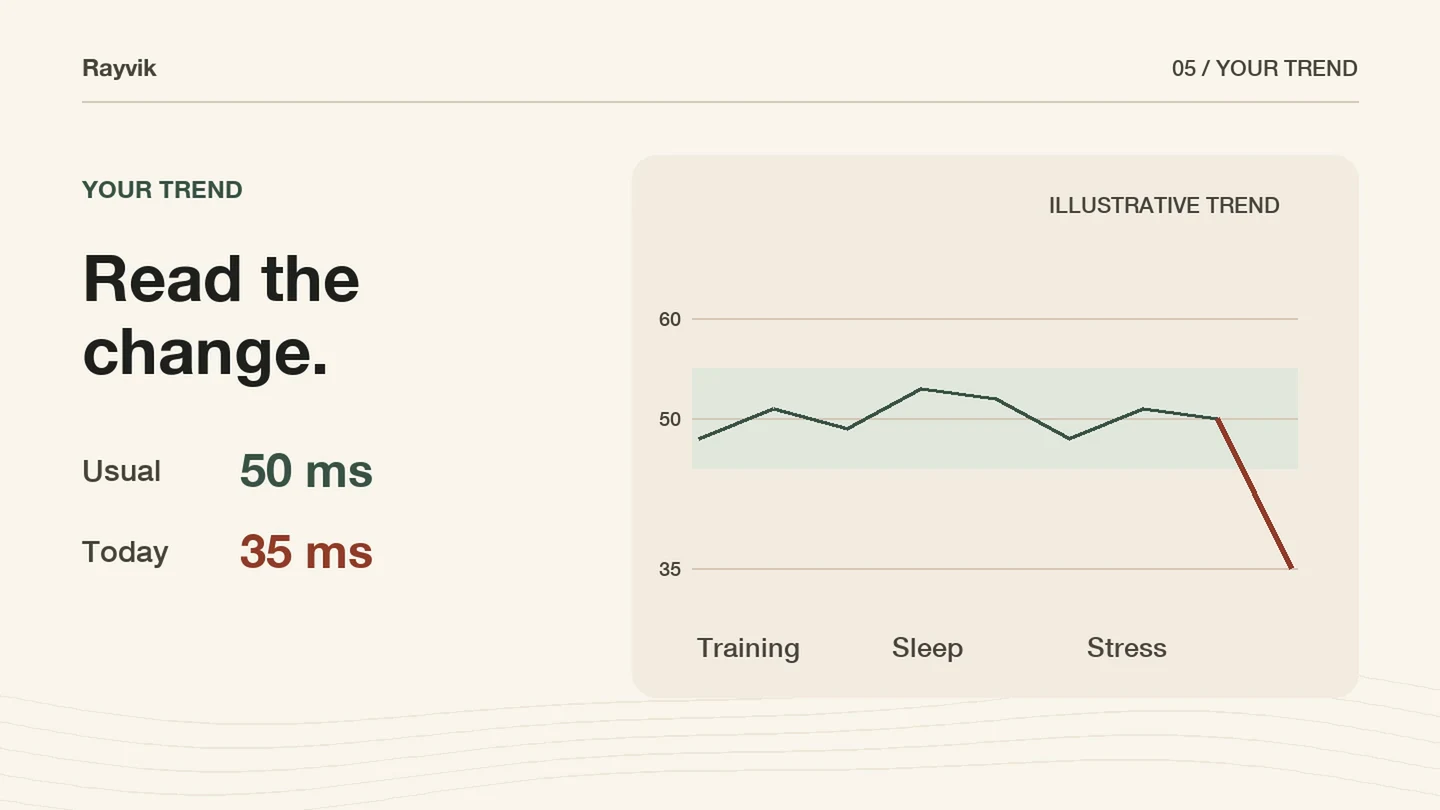
Say I’ve been around 50 ms for a month and this morning my watch says 35. I’ll notice the drop, then look back at yesterday’s run and last night’s sleep.
Should I run if my HRV is low?
Say I have intervals on the plan. If it’s one low reading and I slept well, my resting heart rate looks normal and my legs loosen up during an easy warmup, I might stick with the session.
If my HRV has been low for a few days, my resting heart rate is up and my legs still feel heavy, I might move the intervals and run easy today. If the readings settle back into my usual range and I feel good again, I’d take that as an encouraging sign.
I’d ask the same questions if my HRV jumped well above normal. How much have I been running lately? How have I been sleeping? Does my usual easy pace still feel easy?
How I track HRV over time
I stick with the same watch and compare readings taken at about the same time under similar conditions. When I switch devices or change how I measure, I give myself time to build a fresh baseline. A study in recreational runners used repeated HRV measurements to guide when to schedule harder sessions. Vesterinen and colleagues’ running study
Pace tells me how fast I’m running. Heart rate tells me how fast my heart is beating. HRV gives me another clue about how I’m recovering before my next hard run.
How I turn a recovery check into a change in Plan
In Rayvik, I start in Today. I look at where HRV sits compared with my usual range, how I slept and what I’ve been asking of my legs this week. On the screen below, 35 ms is marked normal and sleep looks good. The same 35 can mean something different for someone whose usual is closer to 50.
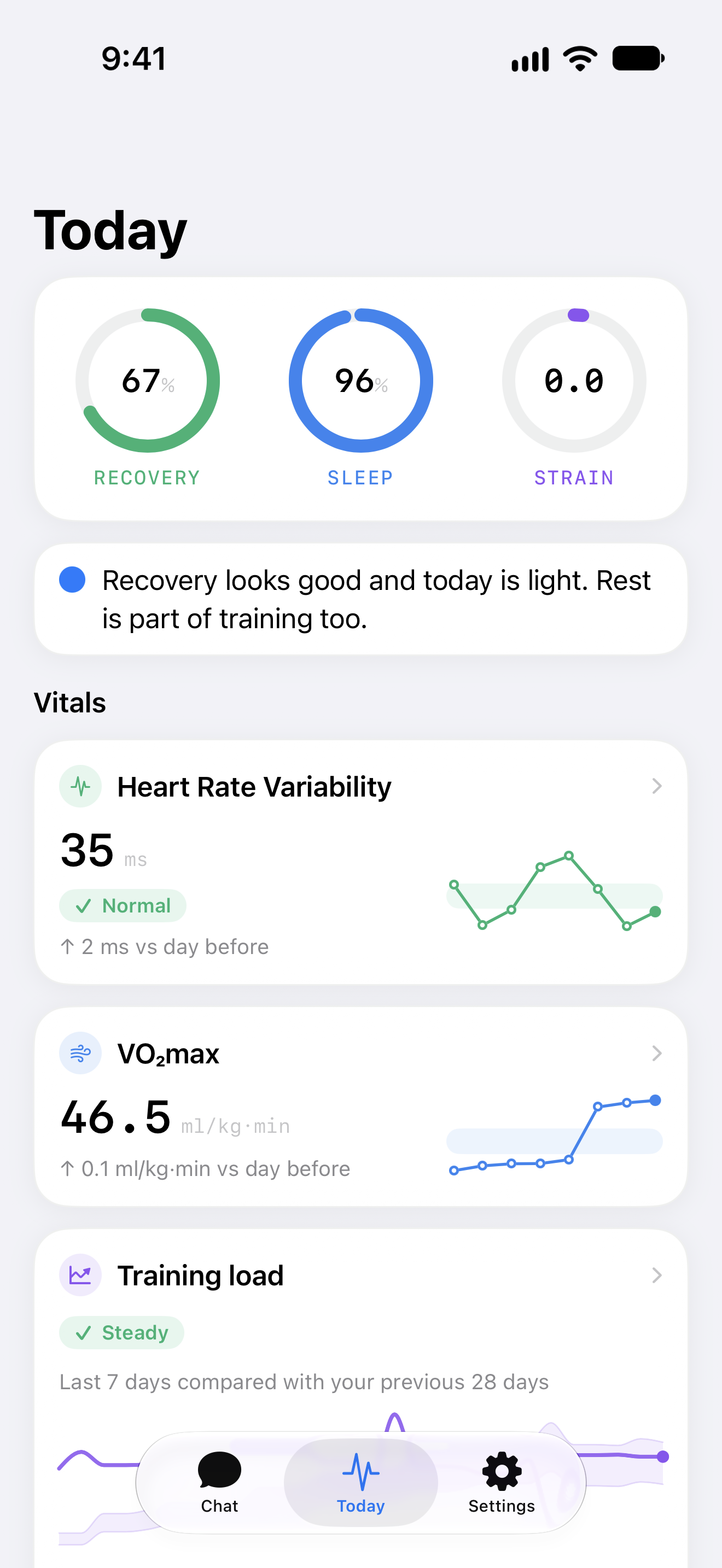
I built Rayvik to help with the next decision. If my legs still feel heavy after an easy warmup, I can tell Avery how it went and talk through the next session. I tested this with a post-marathon recovery week using simulated training and health data. I told Avery, “Stairs still suck tbh. Been sleeping about 6 hours too. Can you check?” Avery checked the sleep records and kept the optional Saturday jog in the plan. I asked to take it out.
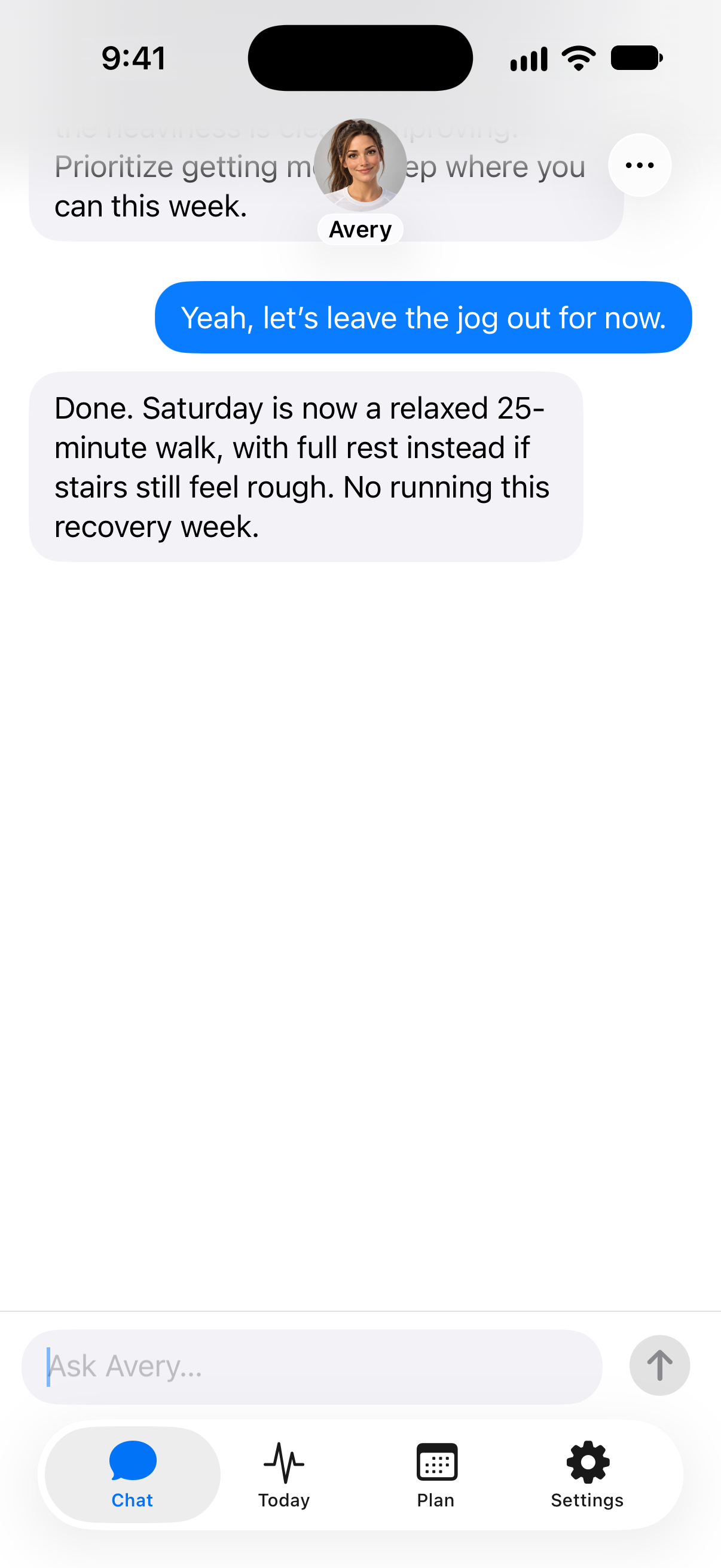
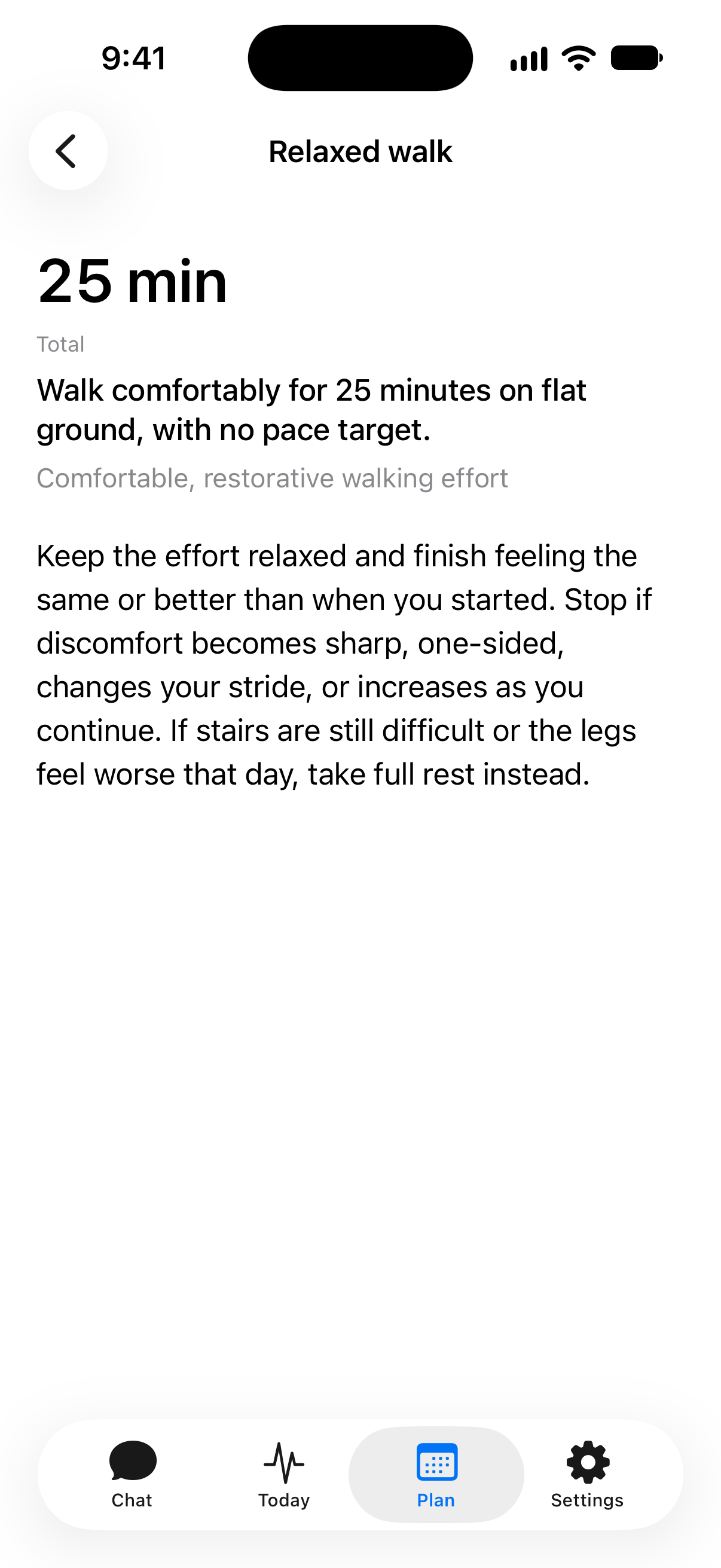
That’s what I want when I check HRV before a run. The numbers give me a reason to check in. How I feel gives Avery something the watch can’t see. I can then look in Plan and see exactly what changed.
Sources & notes
One study of functional overreaching found that an HRV measure could rise while performance fell after heavy training. The Rayvik conversation and saved Plan shown above come from the same product test. The Today screen comes from our app walkthrough.