
HYROX burpee broad jumps: rules, pacing and the run after
The station covers 80 m. Rhythm and valid repetitions matter more than one huge jump: rushed standards can cost more than a conservative cadence.
Official format
| ELEMENT | STANDARD |
|---|---|
| Distance | 80 m for all divisions |
| Burpee | Chest touches the floor |
| Jump | Both feet take off and land together; no extra steps between reps |
Current published Singles format, checked August 7, 2026. Verify the latest official rulebook.
Movement standards to rehearse
- Start behind the line. Place the hands behind the marked line for the first repetition.
- Complete the floor position. Follow the current rulebook's chest-to-floor and foot-placement standards.
- Jump with control. Both feet move together; do not trade validity for a few extra centimetres.
How to pace the station
Practise valid movement before optimizing speed. The useful target is the fastest effort you can repeat without damaging the next run. Use the HYROX race simulator to budget the running, stations and Roxzone together.
Common first-race mistakes
- Jumping too far. Maximal jumps raise leg cost and make the burpee rhythm unstable.
- Racing the first 20 m. A pace you cannot repeat turns the middle of the station into standing recovery.
- Ignoring breathing. Exhale through the rise and settle into a repeatable cadence before chasing speed.
What it does to the running
Burpees can leave breathing far ahead of leg speed. The next kilometre should begin controlled: use the first minute to restore rhythm, then decide whether the target pace is still available.
Plan your first race
Frequently asked questions
How far are the HYROX burpee broad jumps?
The station is 80 m for all standard divisions.
Can you step forward between burpee broad jumps?
The movement must follow the current competition standard; extra steps between repetitions are not the intended movement. Review the current rulebook and judge briefing.
How should I pace burpee broad jumps?
Choose a repeatable jump length and breathing cadence. Consistent valid repetitions are usually safer than maximal jumps followed by long pauses.
Continue through the race
 All 8 HYROX stations →See the full race order, weights and standards in one place.
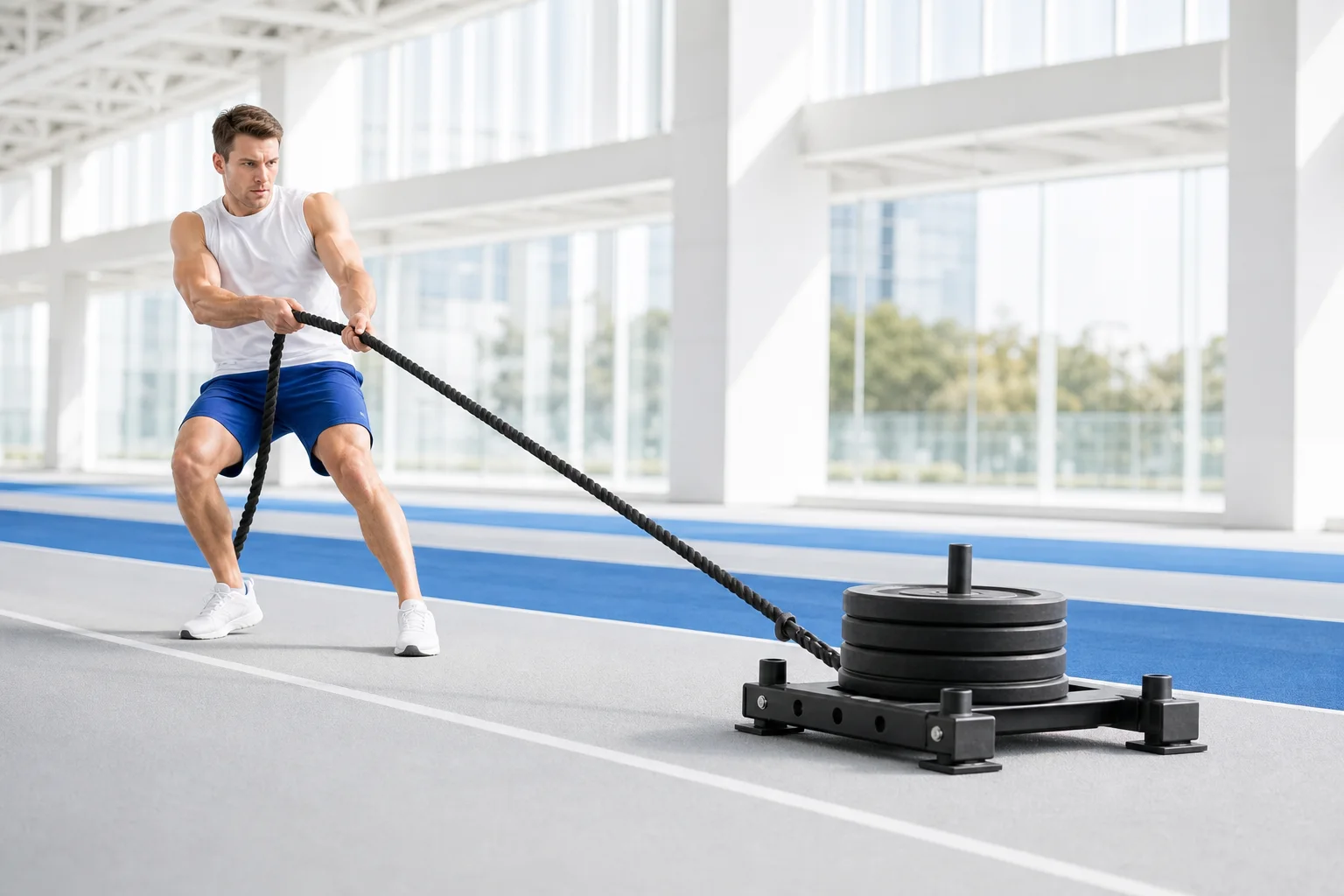 Previous: HYROX sled pull →50 m · 4 × 12.5 m lengths
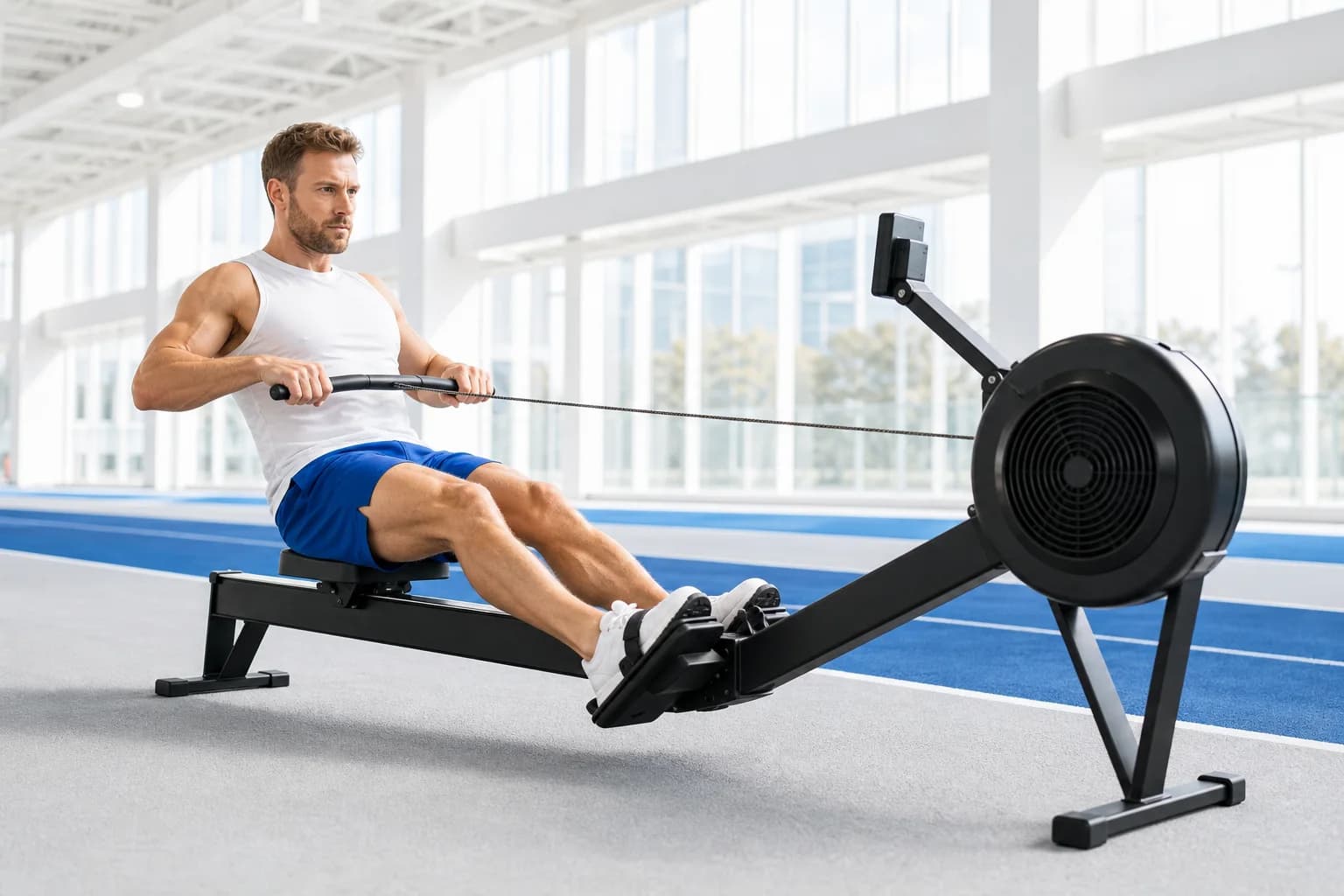 Next: HYROX rowing →1,000 m · damper preset to 6
HYROX is a brand of HYROX World GmbH. Rayvik is independent and is not affiliated with, sponsored by, or endorsed by HYROX.