HYROX stations in order: weights, rules and pacing.
HYROX always follows the same sequence: an approximately 1 km run, one workout station, repeated eight times. This guide gives you the official Singles distances and loads, the rule most likely to cost a rep, and how to protect the run that follows.
BY KAI · RUNNER · RAYVIK FOUNDER
The 8 HYROX stations in order
The fixed order is SkiErg, sled push, sled pull, burpee broad jumps, rowing, farmers carry, sandbag lunges and wall balls. An approximately 1 km run comes before every station.
| ORDER | STATION | WORK | WOMEN OPEN | MEN OPEN |
|---|---|---|---|---|
| 01 | SkiErg | 1,000 m | 1,000 m | 1,000 m |
| 02 | Sled push | 50 m · 4 × 12.5 m | 102 kg | 152 kg |
| 03 | Sled pull | 50 m · 4 × 12.5 m | 78 kg | 103 kg |
| 04 | Burpee broad jumps | 80 m | 80 m | 80 m |
| 05 | Rowing | 1,000 m | 1,000 m | 1,000 m |
| 06 | Farmers carry | 200 m | 2 × 16 kg | 2 × 24 kg |
| 07 | Sandbag lunges | 100 m | 10 kg | 20 kg |
| 08 | Wall balls | 100 reps | 100 × 4 kg · 2.70 m | 100 × 6 kg · 3.00 m |
Open and Pro Singles complete the same stations in the same order. Pro changes the prescribed load at the loaded stations; Doubles partners run together and may share station work. See the complete category table below and verify your event rulebook before training to an exact load.
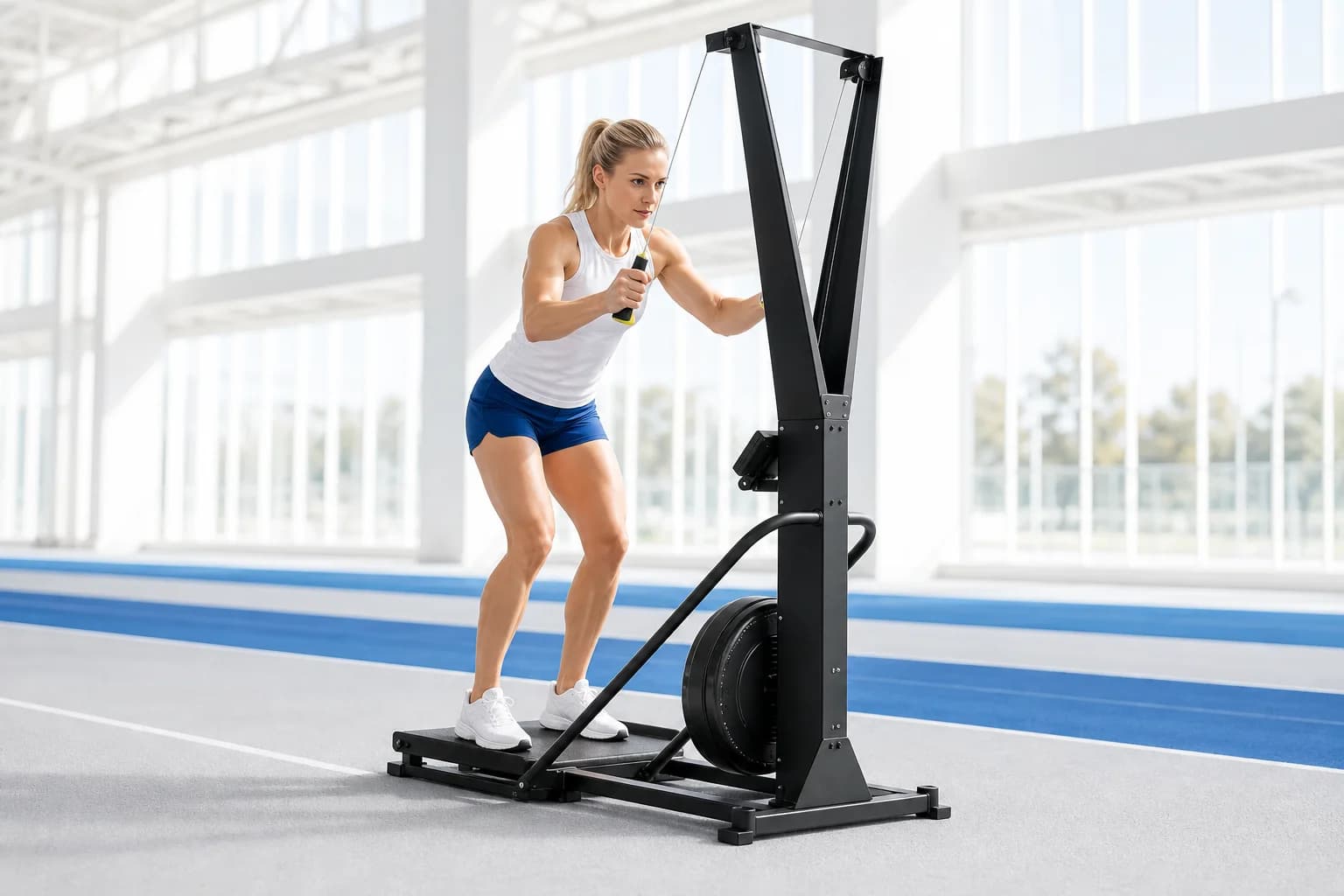
SkiErg
PRIMARY DEMAND · AEROBIC RHYTHM · LATS · TRUNK
- Key standard
- Both feet stay on the SkiErg platform. The damper starts at 6 and may be changed.
- Race cue
- Settle before chasing watts. This is a race opener, not an isolated 1,000 m test.
Next run: The danger is starting run two with breathing already above control.
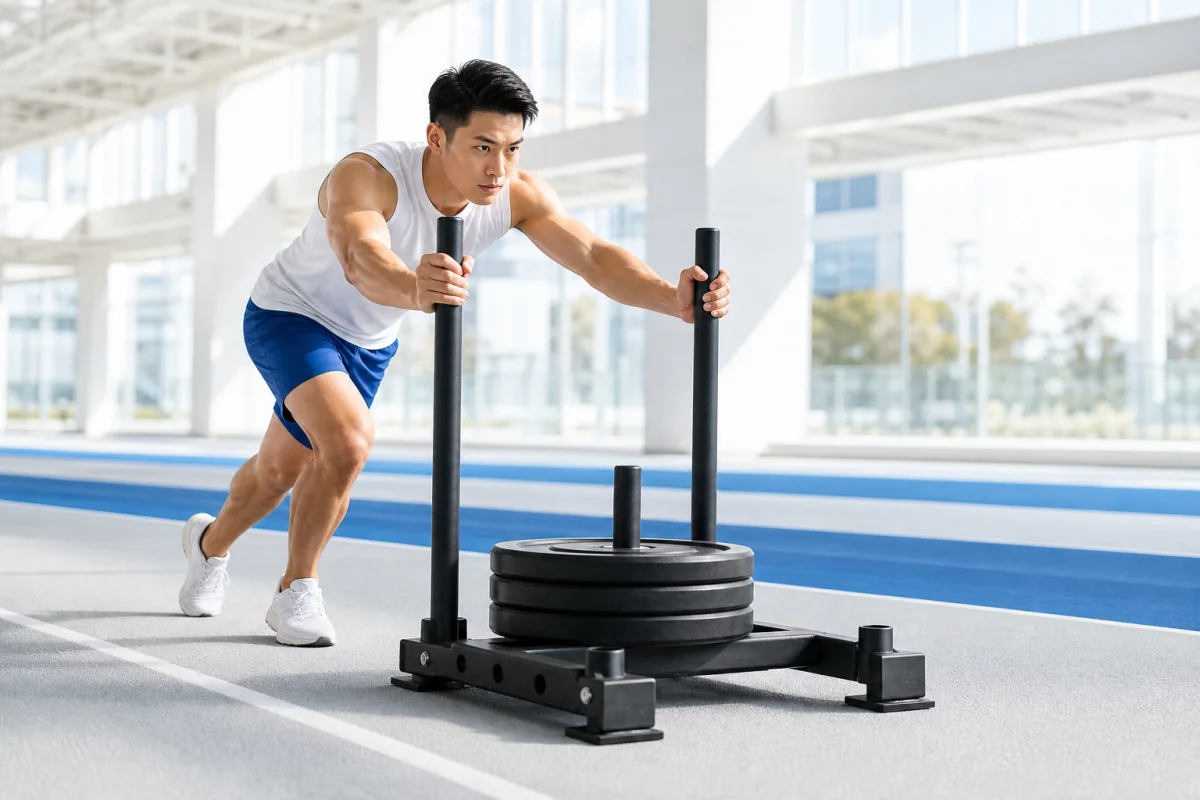
Sled push
PRIMARY DEMAND · QUADS · GLUTES · CALF DRIVE
- Key standard
- Use the assigned lane and move the entire sled across each 12.5 m line before turning.
- Race cue
- Keep pressure on the sled with short, repeatable steps; avoid an all-out first length.
Next run: Expect heavy legs for 100–300 m. Shorten stride until mechanics return.
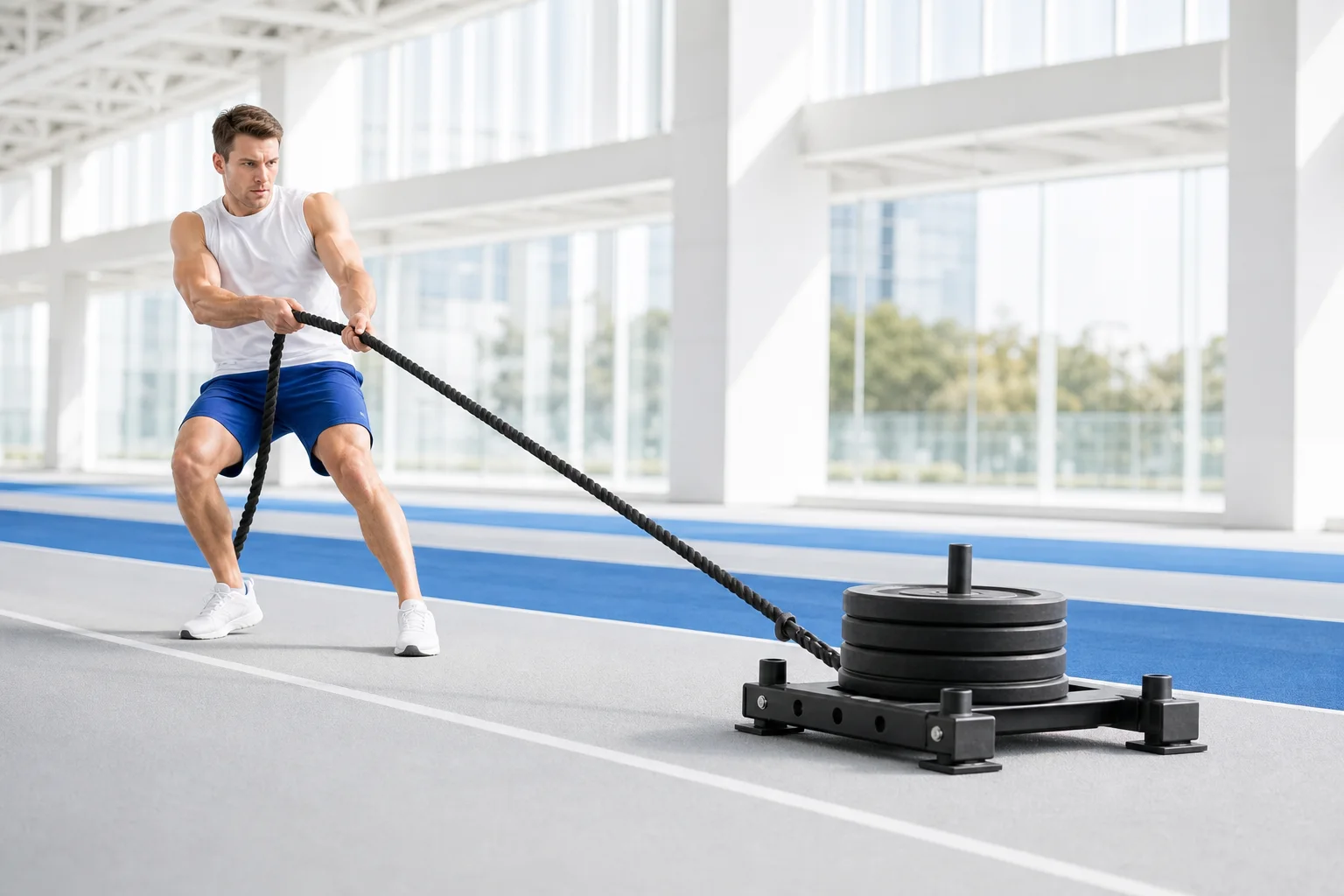
Sled pull
PRIMARY DEMAND · BACK · GRIP · BRACING
- Key standard
- Stay standing and inside the racers box while pulling; keep the rope from obstructing another lane.
- Race cue
- Keep tension in the rope and use a repeatable pull-and-step pattern instead of frantic arm-only pulls.
Next run: Grip and trunk fatigue can tighten the shoulders; relax the hands once you are running.

Burpee broad jumps
PRIMARY DEMAND · FULL-BODY RHYTHM · COORDINATION
- Key standard
- Chest touches the floor; both feet take off and land together; no extra steps or shuffles.
- Race cue
- Choose a jump length you can repeat. Valid rhythm beats a few maximal jumps followed by stops.
Next run: Breathing usually leads the fatigue. Give run five a controlled first minute.
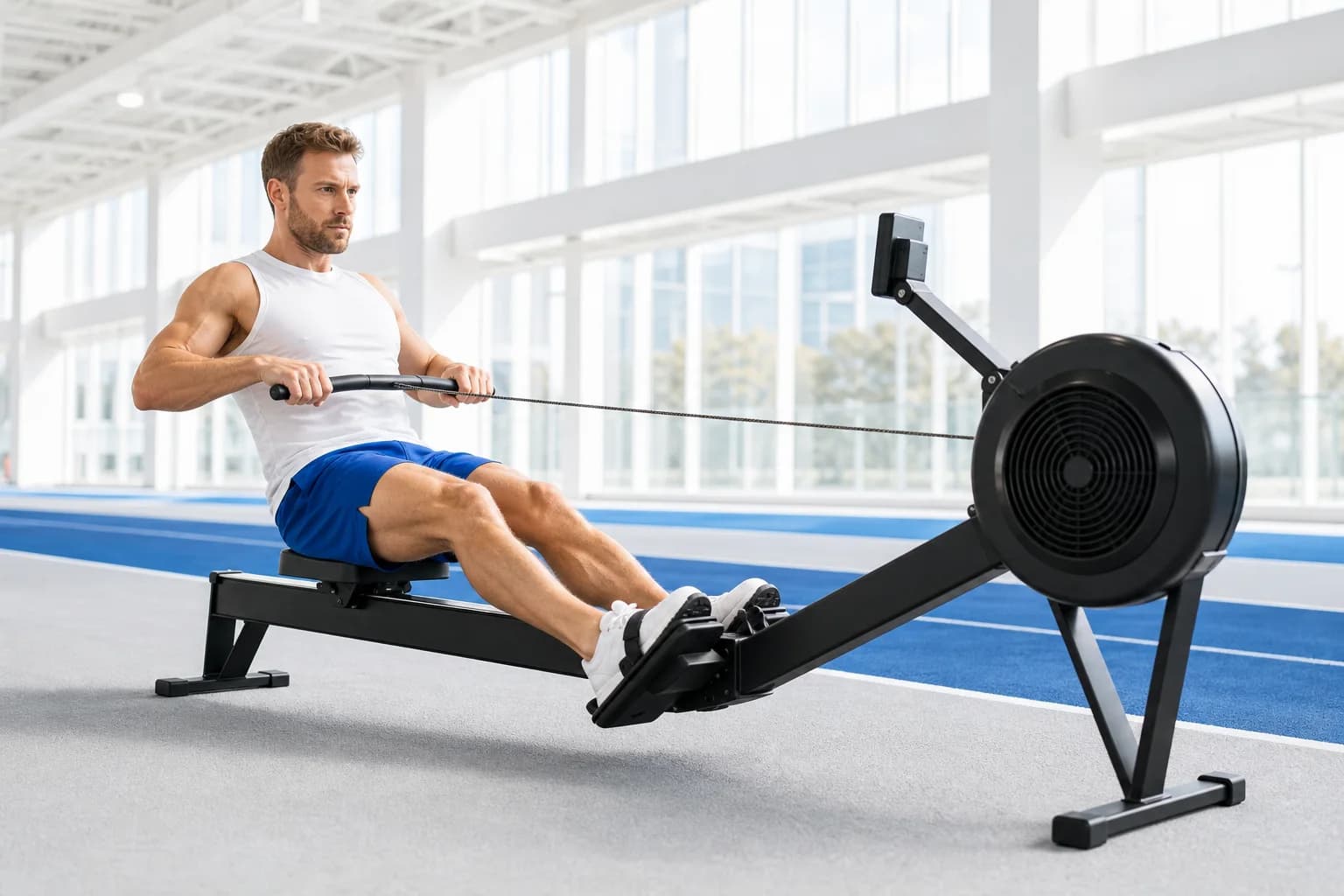
Rowing
PRIMARY DEMAND · AEROBIC POWER · POSTERIOR CHAIN
- Key standard
- Remain seated until the monitor shows the full 1,000 m and a judge confirms completion.
- Race cue
- Use long, efficient strokes at a sustainable split; avoid turning the middle of the race into a 1k PB.
Next run: A hard row can make the first turns of run six feel flat. Stand tall before forcing pace.

Farmers carry
PRIMARY DEMAND · GRIP · TRUNK · GAIT
- Key standard
- Carry both kettlebells with arms extended by your sides. Resting is allowed without moving them forward.
- Race cue
- Walk tall and briskly. Put the bells down deliberately before grip failure changes your posture.
Next run: Forearm fatigue matters less than a collapsed torso; reset posture as run seven begins.
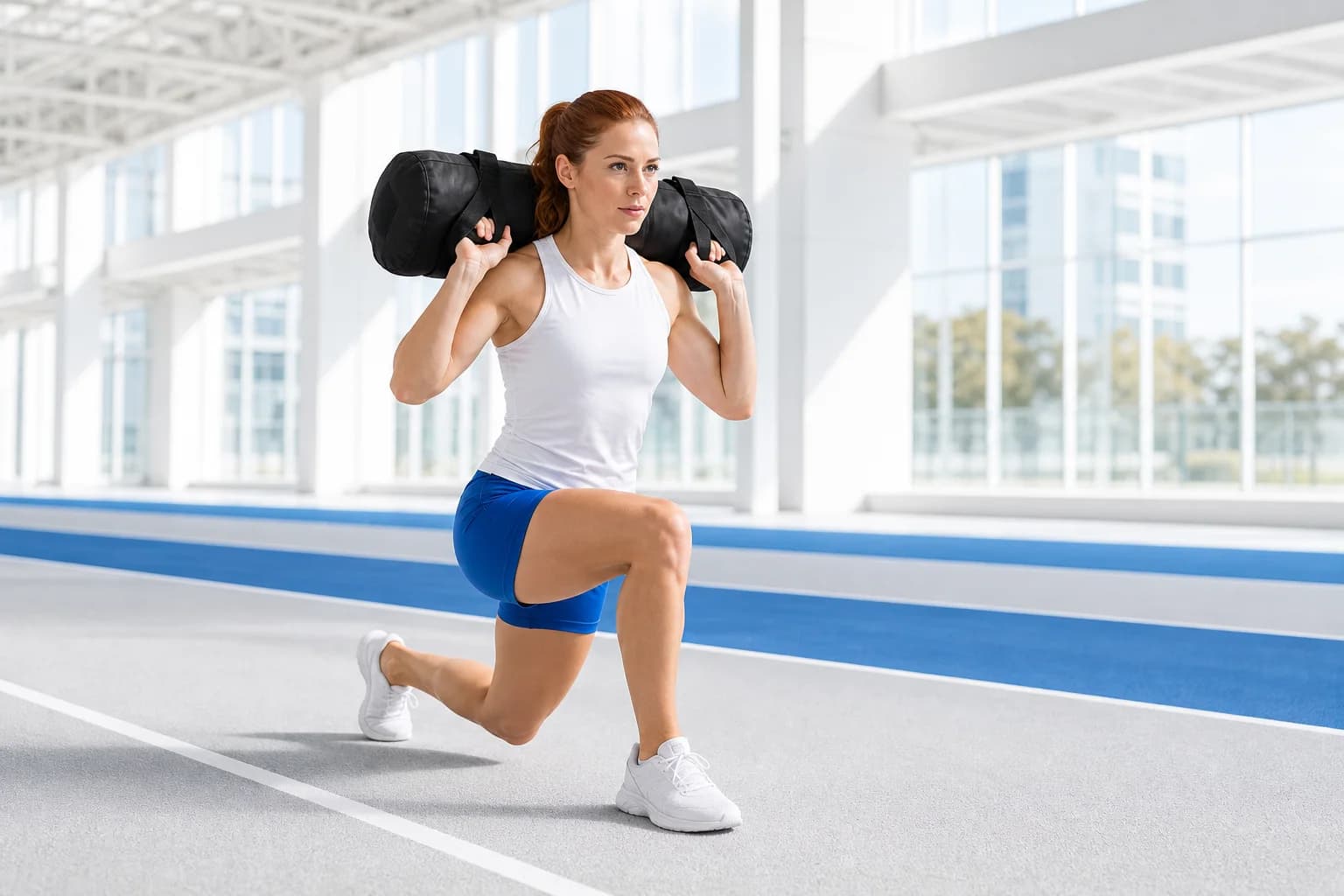
Sandbag lunges
PRIMARY DEMAND · QUADS · GLUTES · STABILITY
- Key standard
- Alternate legs, touch the trailing knee down, stand to full extension and take no shuffle steps between reps.
- Race cue
- Use compact steps and keep the bag settled. Break standing, not while fighting a poor position.
Next run: Run eight begins on locally fatigued legs. Cadence is usually easier to recover than stride length.
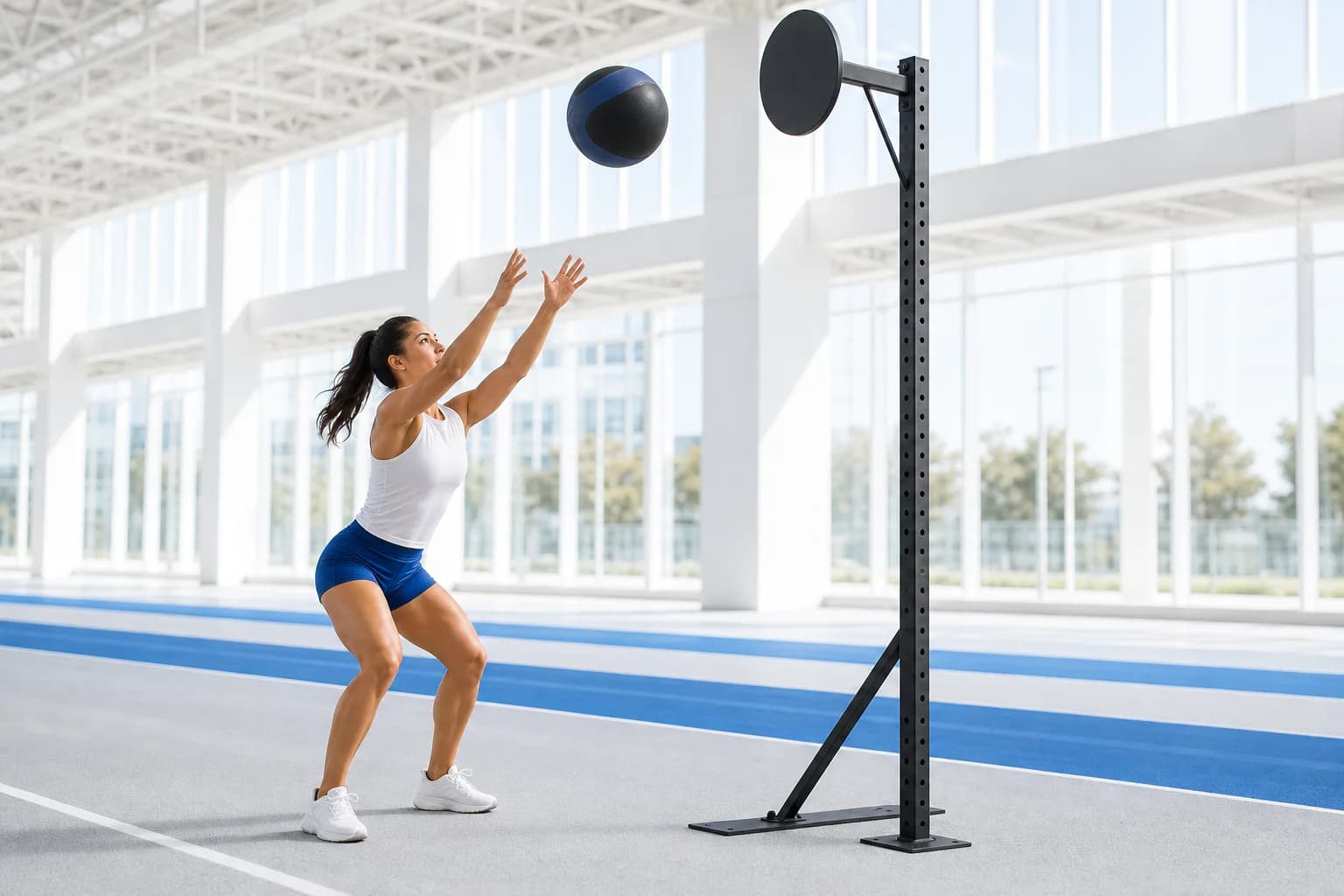
Wall balls
PRIMARY DEMAND · SQUAT ENDURANCE · SHOULDERS
- Key standard
- Hips descend below the knees and the ball hits the correct target; every division completes 100 valid reps.
- Race cue
- Plan sets before you start and break before no-reps arrive. There is no run left to protect.
Next run: This is the finish. The pacing decision was made during the final kilometre, not on rep 70.
2026/27 HYROX Singles weights and distances
Distances and reps stay fixed; the loaded stations change by category. Sled figures include the sled.
| STATION | WOMEN OPEN | WOMEN PRO | MEN OPEN | MEN PRO |
|---|---|---|---|---|
| SkiErg | 1,000 m | 1,000 m | 1,000 m | 1,000 m |
| Sled push | 102 kg | 152 kg | 152 kg | 202 kg |
| Sled pull | 78 kg | 103 kg | 103 kg | 153 kg |
| Burpee broad jumps | 80 m | 80 m | 80 m | 80 m |
| Rowing | 1,000 m | 1,000 m | 1,000 m | 1,000 m |
| Farmers carry | 2 × 16 kg | 2 × 24 kg | 2 × 24 kg | 2 × 32 kg |
| Sandbag lunges | 10 kg | 20 kg | 20 kg | 30 kg |
| Wall balls | 100 × 4 kg · 2.70 m | 100 × 6 kg · 2.70 m | 100 × 6 kg · 3.00 m | 100 × 9 kg · 3.00 m |
Source: HYROX Singles Rulebook 2026/27, sections 8.1–8.8. Sled loads include the sled; surface friction can make equal listed loads feel different. The event briefing and judge instructions take precedence. Read the official rulebook ↗
Train the skill fresh. Test the skill tired.
Station technique and compromised running are different abilities. Your week needs both, but not every session needs to become a full-race simulation.
Learn valid movement
Practise standards while fresh: foot position, lane lines, squat depth, target contact and safe equipment handling. Speed comes after repeatable reps.
Build the limiter
Use strength work for sleds, carries and lunges; use controlled intervals for the ergs and burpees. Progress one variable at a time.
Connect station to run
Add short, measured combinations: run → station → run. The goal is not maximal suffering; it is learning how quickly posture, cadence and breathing return.
Turn the station guide into a race plan
Start with readiness, build a complete race budget, then keep easy training genuinely easy.
First-race readiness
Check your running base, training runway and station exposure.
Open tool →HYROX race simulator
Plan all eight runs, stations and Roxzone from current ability or a target finish.
Open tool →Zone 2 heart rate
Estimate an easy aerobic range for base-building sessions.
Open tool →HYROX station FAQ
What are the 8 HYROX stations in order?
The fixed order is SkiErg, sled push, sled pull, burpee broad jumps, rowing, farmers carry, sandbag lunges and wall balls. An approximately 1 km run comes before every station, for 8 km of designated running in total.
Do HYROX stations change between Open and Pro?
The station order, distances and repetitions stay the same in Singles. Pro divisions use heavier sleds, kettlebells, sandbags and wall balls. Target height for wall balls is based on category: 2.70 m for women and 3.00 m for men.
How many wall balls are in HYROX?
Every Singles division completes 100 valid wall-ball repetitions in the 2026/27 rulebook. Ball weight and target height vary by category, but the repetition count does not.
Which HYROX station is hardest?
There is no universal hardest station. Sleds expose strength and technique, lunges create severe local leg fatigue, and wall balls punish poor pacing late in the race. Your biggest limiter is the station that most disrupts the running that follows.
Should I train HYROX stations without running?
Use fresh station practice to learn safe, valid movement, but do not stop there. Add measured run-to-station and station-to-run sessions so you learn to control output and restore running form under fatigue.
Are gym sled weights directly comparable with race day?
No. The listed mass is only part of the resistance: carpet, sled design, surface condition and friction change how it feels. Use official loads as a reference, then train across a sensible range rather than relying on one gym setup.
HYROX is a brand of HYROX World GmbH. Rayvik is independent and is not affiliated with, sponsored by, or endorsed by HYROX.