Low Apple Watch Readiness Score? Should You Still Run?
If a Readiness score has ever made you question a run you felt ready for, I know the feeling.

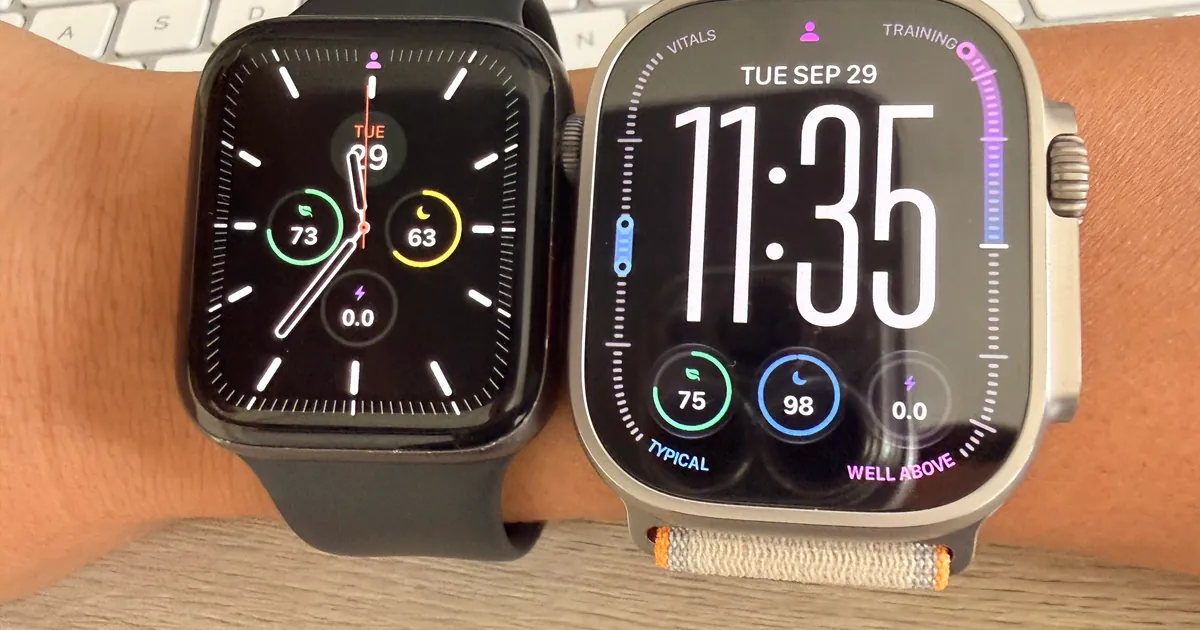
Maybe Readiness was one of the reasons you bought an Ultra 4. After at least seven nights of wearing it to bed, you’ve finally got a number. It’s lower than you’d hoped, even though you feel pretty good.
Would you change your run because of it?
I’m Kai, a runner who likes trying new wearables. Getting to try Readiness early was one of the main reasons I upgraded to the Ultra 4, and I’ve had that same hesitation.
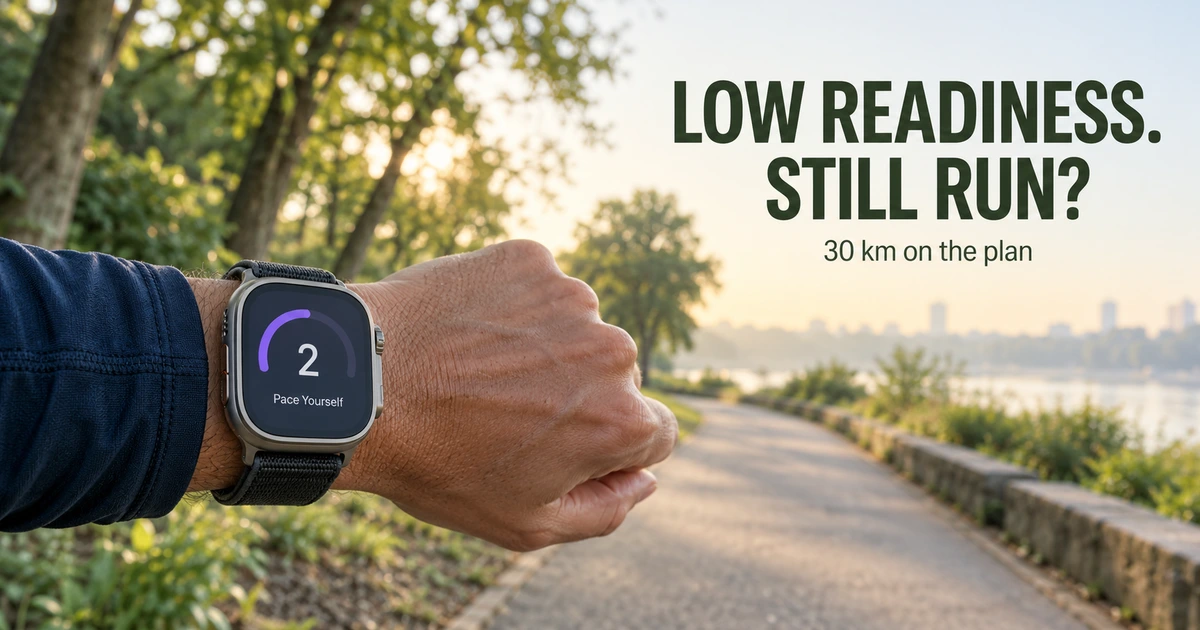
One morning, I had 30 km on the plan and a Readiness score of 2. I’d been awake in the middle of the night, unable to sleep, and still had to get up early. The number made sense. I just wasn’t sure whether to cancel the run or make it shorter.
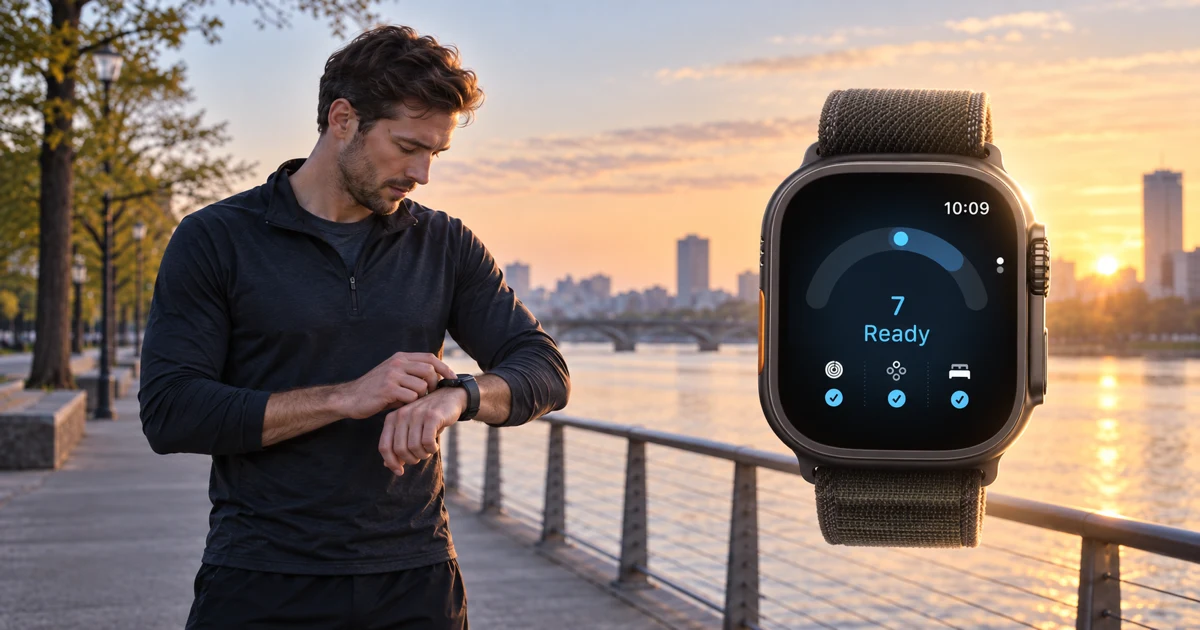
On another morning, I woke up feeling energetic after a good night’s sleep. I’d done strength training the day before. The watch gave me a 5, which Apple calls Ready, and I still caught myself questioning the easy run on my plan.
How is your Apple Watch Readiness score calculated?
Apple uses recent activity and training load, daytime and overnight vitals, and sleep to calculate a score from 0 to 10. The score can fall during the day, including after a workout. If you’re looking for supported models or help setting it up, the Apple Watch Readiness compatibility guide covers that.
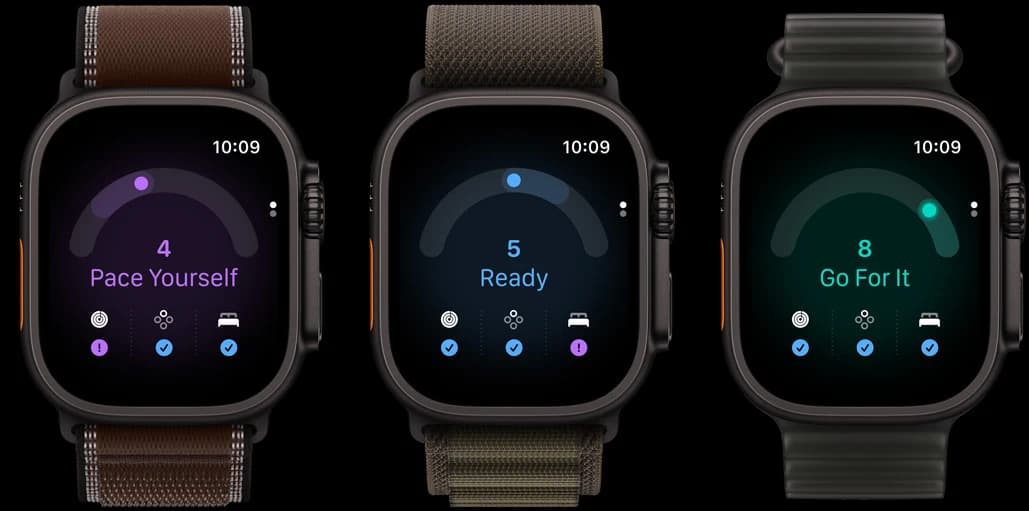
Apple explains what goes into the score, but I haven’t found a public formula showing how much each part counts. I also haven’t found a published study that tells me how to turn that total into a decision about today’s run.
One Ultra 4 owner on Reddit felt good but wanted to know why their score was 6, still in Apple’s Ready range. Another scored 1 after two poor nights of sleep and felt it matched their fatigue.
Should you run with a low Apple Watch Readiness score?
Before I look at the number, I ask how I feel. Did I wake up alert? Am I unusually tired, sore, or uncomfortable? I also try to separate feeling well enough to run from simply not wanting to miss the session.
I did a bit of reading too, and found some support for that order. In an official WHOOP AMA, research scientist Greg Grosicki recommended checking how you feel before looking at your metrics, so the number doesn’t color your own assessment.
Then I look at the score and how hard the planned run is. I’ve used WHOOP and Garmin too, and I keep each device’s scale in mind. The same number can mean different things on different devices.

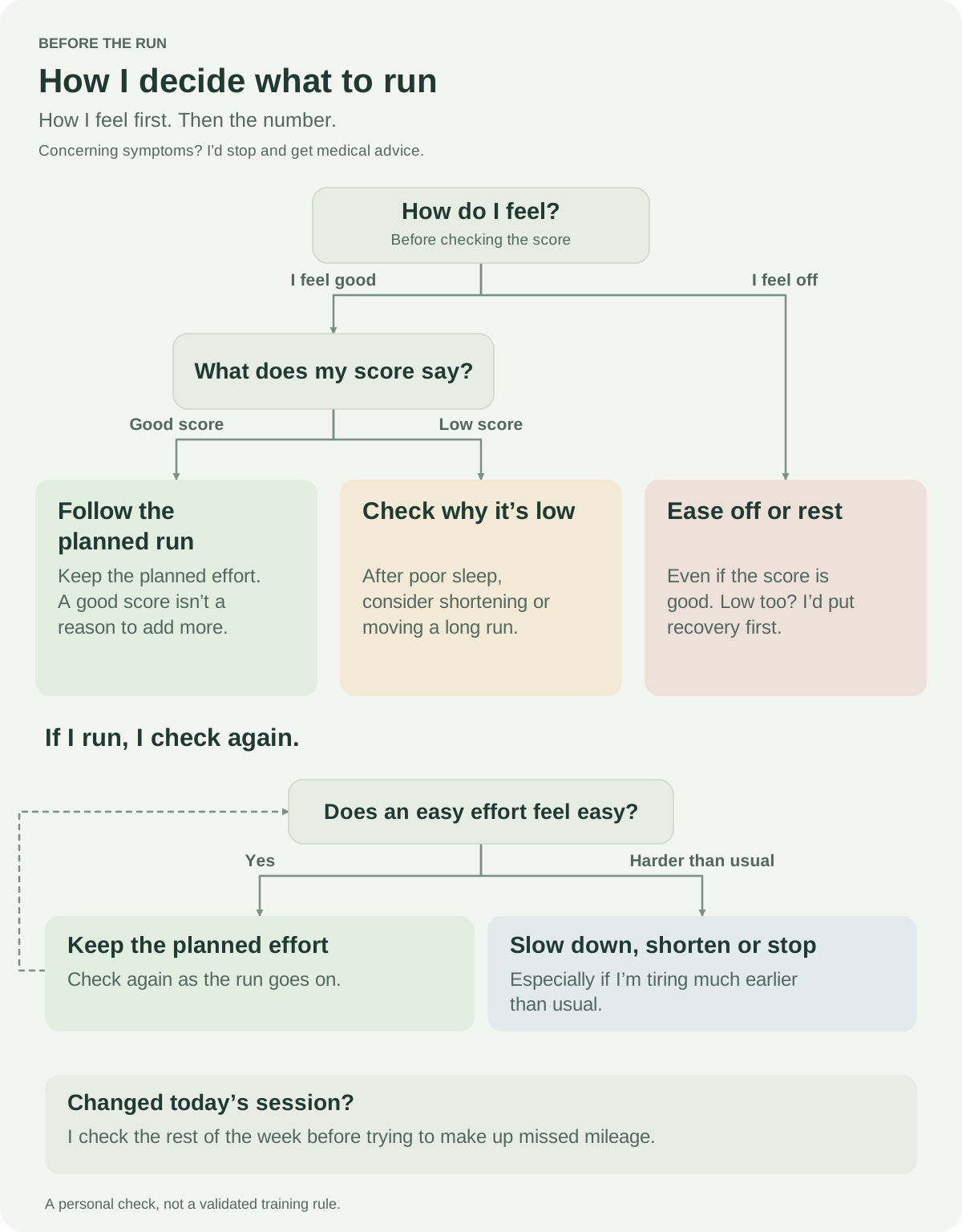
Read the flow as steps
- I check how I feel before looking at the score. If I feel off, I’d ease off or rest, even with a good score. If the score is low too, I’d put recovery first.
- If I feel good, I check the score and the run I’ve planned. With a good score, I’d keep the planned effort. With a low score, I’d check why it’s low; after poor sleep, I’d consider shortening or moving a long run.
- If I decide to run, I start easy and check how I feel during the warm-up and along the way. If easy effort feels harder than usual or I’m tiring much earlier, I can slow down, shorten the run, or stop.
- If I change today’s session, I look at the rest of the week before trying to make up missed mileage.
Concerning symptoms? I’d stop and get medical advice. A personal check, not a validated training rule.
The awkward one for me is feeling fine with a low score. I look at what changed and what’s on the plan. After a bad night’s sleep, I’d consider shortening or moving a long run. If I go out, I’ll start easy and keep checking how I feel, ready to slow down or shorten it.
If I feel tired or uncomfortable despite a good score, I’d cut the session back or rest. If I had concerning symptoms, I’d stop and get medical advice, whatever the score said. Apple also warns against relying on Readiness alone to decide whether exercise is safe.
In the end, I cut the 30 km run to 25 km and checked how I felt along the way. I did the easy run too, starting deliberately slower and continuing to check how I felt.
You can change your mind after you start
Deciding to start doesn’t mean I have to finish the run as planned. During the warm-up, I check whether an easy effort actually feels easy. If I’m working harder than usual or getting tired much earlier, I can slow down, shorten the run, or stop.
If you’re trying to keep your weekly mileage, I’d still check how the sessions fit together. Moving today’s hard session might put it too close to the long run. I’d rather adjust the next few days than squeeze everything in just to hit the original total.
How I’ve brought this into Rayvik
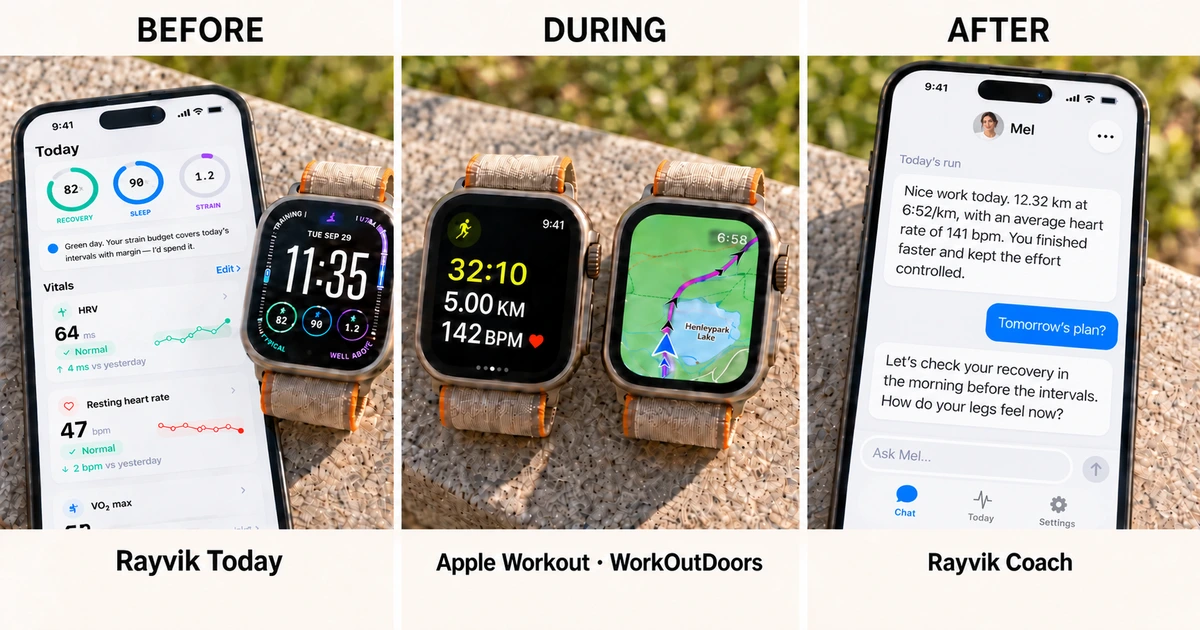
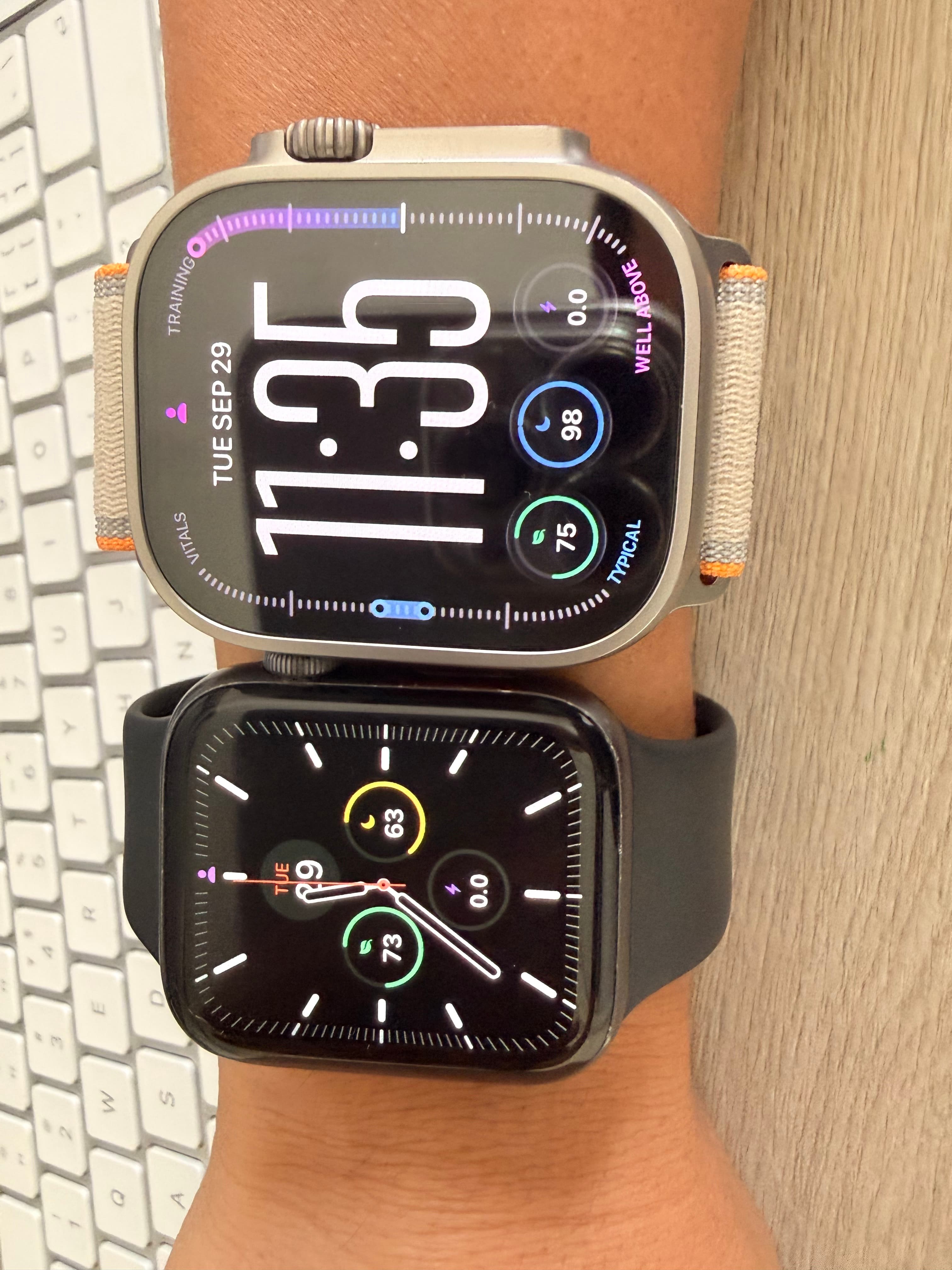
That’s how I think about the Recovery score in Rayvik, the app I’m building. It’s our own estimate, separate from Apple Readiness, and it also works on compatible older Apple Watches. I don’t give it the final say either.
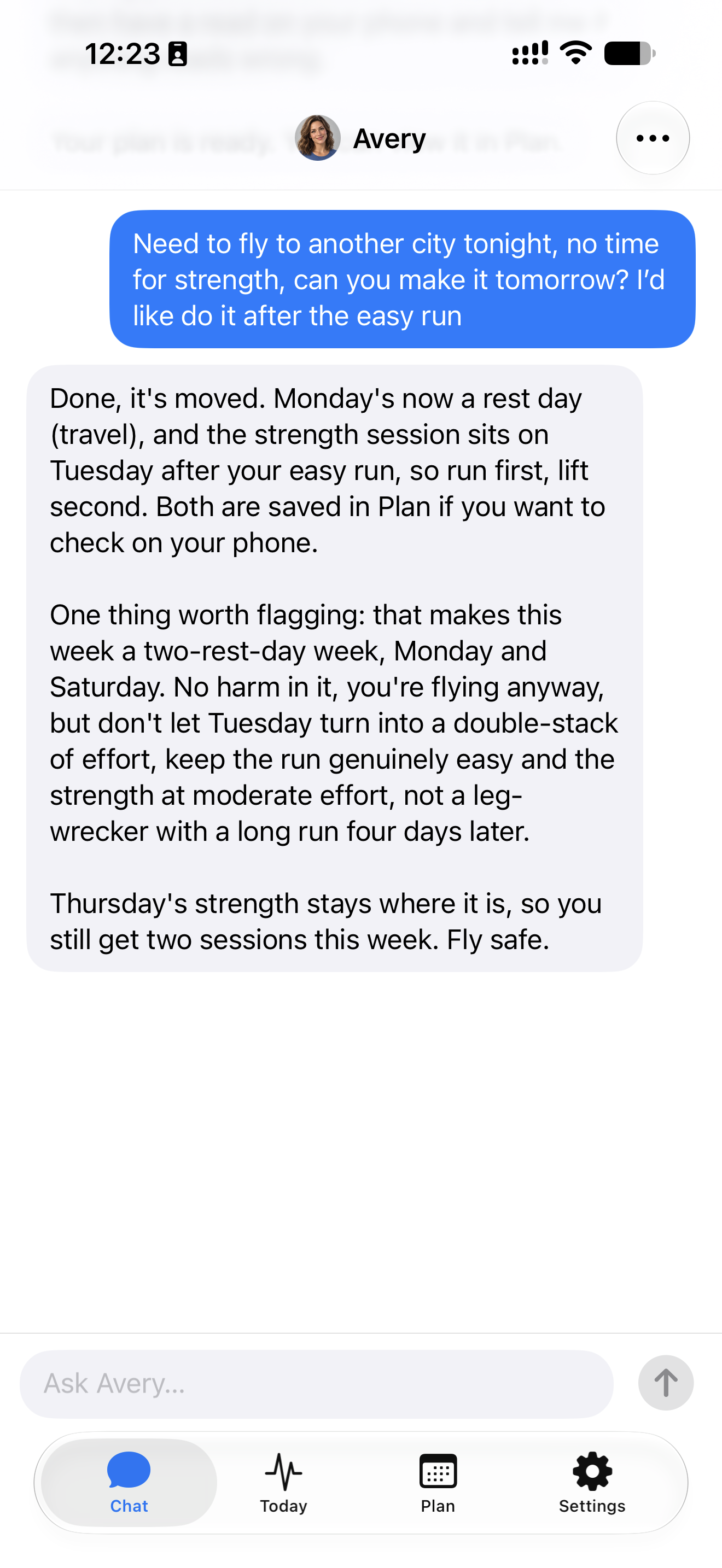
When I’m not sure what to change, I can talk it through with the AI coach. I might switch a hard session to an easy run if keeping some mileage makes sense, or take a rest day and adjust the week around it.
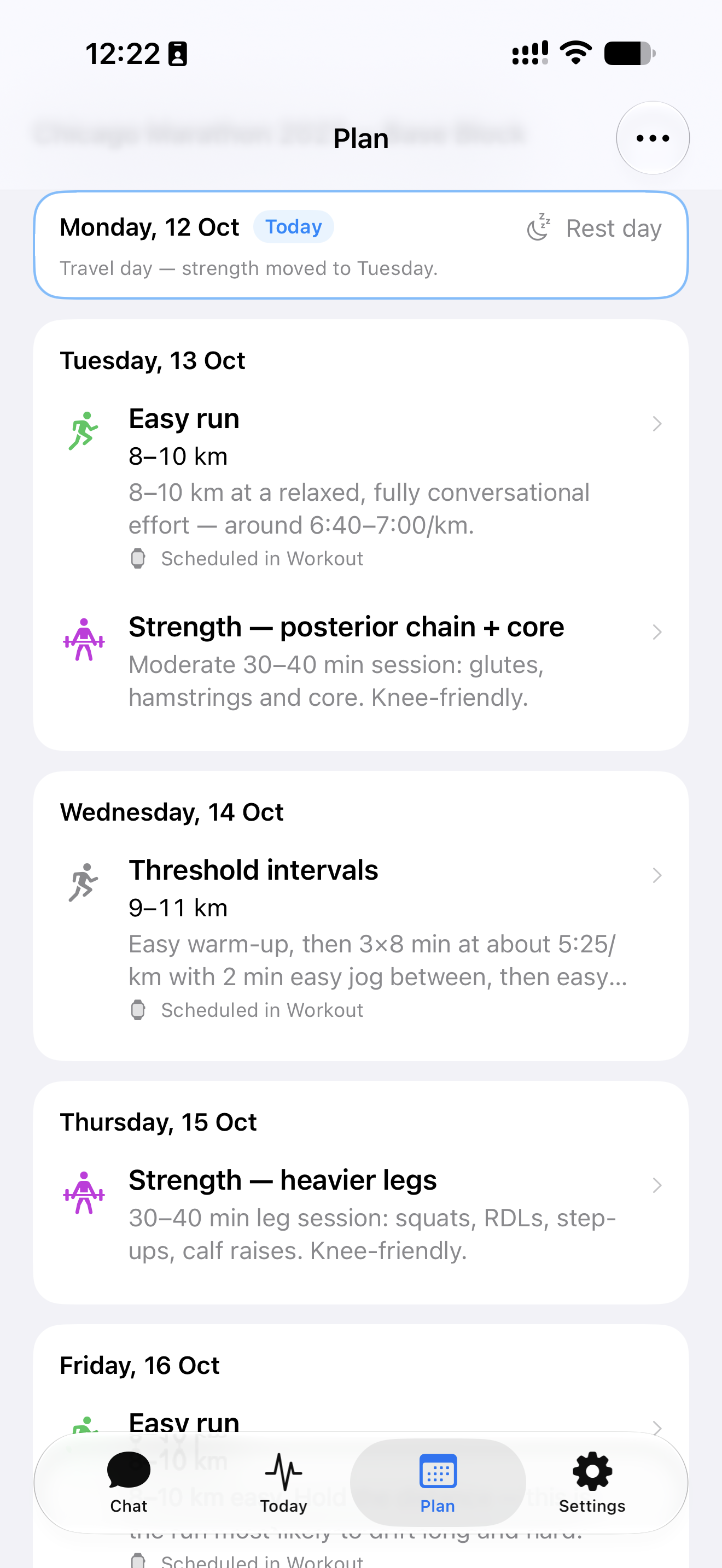
Here’s a travel change from my own plan. I had a flight and asked to move strength. Monday became a rest day, and strength moved to Tuesday after the easy run.
Questions about running with low Readiness
Does a low Readiness score mean you should skip your run?
Not automatically. I’d look at why it’s low and what’s on the plan. I’d be more cautious about a long run, or if I’d been unusually tired for several days.
Can you trust Apple Watch Readiness when it doesn’t match how you feel?
I wouldn’t assume the watch is wrong just because we disagree. It may have picked up something I haven’t noticed, or its estimate may be off. I’d check for changes in the readings and look back at my recent training before deciding what to do.
Why can your Readiness be low even after a good night’s sleep?
Sleep is one part of Apple’s score. Recent activity, training load and daytime or overnight vitals can also affect it. I’d check those too, even after a good night’s sleep.
Why does your Readiness score drop after a run?
Apple updates Readiness to include activity during the day, so a drop after a run can reflect the work you’ve just done. I wouldn’t read that drop alone as a sign that I shouldn’t have run.
Sources & notes
This is a personal training approach, not a validated decision rule. Reddit comments are individual accounts. WHOOP’s AMA discusses HRV variability and subjective assessment, not a validation of Apple Readiness. Grosicki said they did not have research showing whether HRV variability or subjective feelings better predicted performance that day. Kai is Rayvik’s founder. Rayvik Recovery is separate from Apple Readiness; available scores depend on compatible recorded health data and permissions. Plan access is being rolled out in the beta.
For the distinction between measurement accuracy and a recovery score’s usefulness, Bellenger and colleagues’ 2021 study tested HR and HRV from WHOOP 2.0 against ECG in six healthy young adults. It explicitly excluded validation of the Recovery score itself. The paper discloses a potential author conflict involving WHOOP sponsorship after data collection. These results should not be generalized to current devices or used as evidence for Apple’s algorithm. Read the study.